by Angie Pereira Calvo
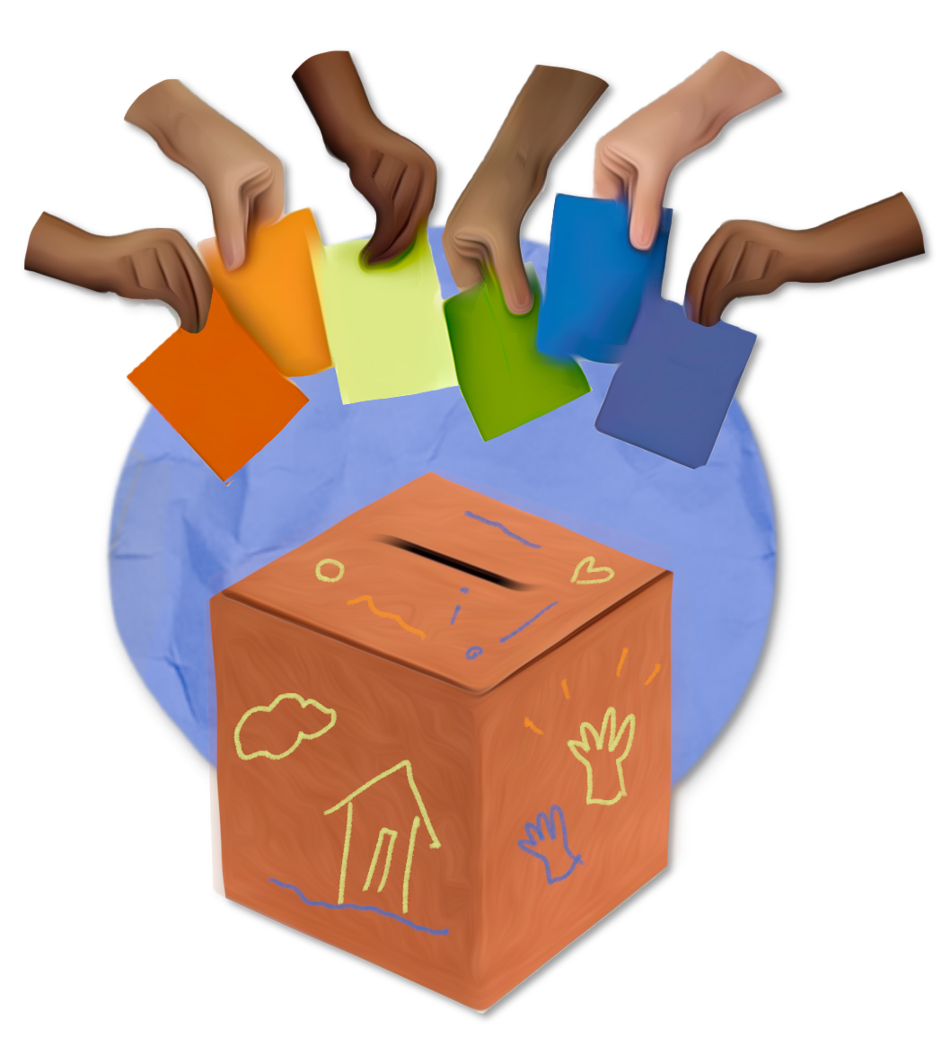

Assuming that evaluation has a political role means that it can challenge official narratives, make injustices visible and contribute to democratising public action. But this requires going beyond traditional technical formats: whose voices do we incorporate, to whom is the report addressed, what legitimacy do we build from below?
What voices do we incorporate?
This is both an ethical and political question. Incorporating only beneficiaries or end-users contributes to the extractive logic where communities are the object of study, instead of conceiving them as subjects of knowledge. It is necessary to recognise that people possess expert knowledge about their own reality. Their knowledge, experiences, survival strategies and analysis are fundamental evidence to understand the real impact of interventions.


In addition, it is essential to consider the voices of those who implement policies at the territorial level: local public officials, implementing social organisations, community leaders. These actors often develop creative and informal adaptations that may be more effective than the original designs, but are rarely documented or systematised.
Who is the report addressed to?
Evaluation reports are traditionally directed from a vertical, top-down logic, i.e. towards decision-makers, donors and institutions. This vertical orientation reproduces power relations where knowledge flows from the grassroots to the elites, but rarely returns in a useful and understandable way to those who provided the primary information. And findings and recommendations are rarely socialised horizontally, between the users of the evaluated programme and members of the implementing team.
If evaluation aspires to democratise public action, it must be communicated horizontally, and even downwards, reaching those who most need this information to strengthen their organisational strategies and propose alternatives from their territories and experiences, enabling accountability to flow at all levels: community, organisation and project support entities.
This requires a revolution in evaluation formats and languages. Diversifying audiences goes beyond “translating” the same content into different formats. It involves recognising that different actors need different types of information for their specific purposes. When communities have access to systematised data about their reality, strengthens their advocacy capacity and generates a virtuous cycle of ownership over evaluative knowledg is generated. This data can be used to hold their representatives accountable, to design alternative proposals, to articulate themselves.
It is also crucial to consider the media – and social networks – as a strategic audience. Evaluative findings can generate debates and create social pressure for changes in public policy.
What legitimacy do we build from below?
The legitimacy of evaluation must be built upon social relevance, practical utility and community recognition. An evaluation is legitimate when people recognise themselves in its findings, when it provides useful elements for everyday life and when it contributes to making their demands visible. This legitimacy “from below” is built through sustained dialogue, methodological transparency adapted to different audiences, and commitment to the follow-up and use of evaluation findings in processes of advocacy and social transformation.
Building legitimacy means expanding our criteria for rigour to include cultural relevance, experiential resonance and transformative utility. An evaluation can be methodologically flawless, but lack social legitimacy if it does not connect with the concerns and priorities of communities.
Legitimacy is also built through reciprocity. There must be a tangible return: strengthening local capacities, supporting organisational processes, connecting with wider networks, effectively influencing policies and programmes.
VOPEs as Democratic Governance Actors
Voluntary Organisations for Professional Evaluation (VOPEs) are challenged to reinvent themselves to be more than technical articulators or spaces for professional exchange. They must become active actors of democratic governance, facilitating processes of co-production of knowledge that connect technical expertise with popular knowledge.
It is imperative to assume a critical intermediary role: translating between different languages and logics, facilitating encounters between diverse actors, and creating bridges between evaluative evidence and transformative political action. VOPEs can become spaces of confluence where academics, civil servants, social leaders and organised citizens build common agendas for evaluation and social change.
To assume this role, VOPEs need to transform themselves. They must democratise their own governance structures, incorporating representation from social organisations and communities. Their events and publications must also be accessible to diverse actors in the policy ecosystem.
VOPEs can also play a crucial role in developing evaluative capacities in social organisations and citizen movements. Instead of keeping evaluation as specialised knowledge, they can promote methodological transfer processes that allow communities to develop their own capacities for systematisation, analysis and proposal.
VOPEs can become spaces of epistemological resistance, legitimising and making visible participatory methodologies, local knowledge and evaluative innovations that emerge from the territories. They can document and systematise community evaluation experiences, create horizontal exchange networks and generate publications that circulate outside traditional academic circuits.
The political role of VOPEs also implies taking public positions on issues of social justice and democratisation. They cannot maintain a false technical neutrality when the policies they evaluate have differentiated impacts on population groups. They must use their expertise to contribute to public debates on equity, participation and transparency.
Towards Transformative Evaluation
As Joan Subirats (2011) reminds us, governing is also about listening, interpreting and engaging in dialogue with conflict. Participatory evaluation embodies this dialogic understanding of governance. It does not seek to eliminate tensions or conflicts, but rather to make them explicit in order to address them and, through their resolution, build fairer and more democratic policies. Evaluation becomes a privileged space for the exercise of active citizenship, where different actors can confront their perspectives, build provisional agreements and design collective strategies for social transformation.


Implementing this transformative vision of evaluation involves concrete challenges:
First, new professional competencies are required: those of us who evaluate must develop skills in facilitation, cross-cultural communication, conflict mediation and consensus building. In addition to mastering research techniques, capacities are needed to navigate complex and politically sensitive social processes.
Second, it demands institutional change. Organisations that fund and commission evaluations must be willing to invest more time and resources in participatory processes. Criteria for evaluative quality must be broadened to include indicators of participation, community ownership and practical use of findings.
Third, it requires new ethical frameworks. Professional codes of conduct must address dilemmas specific to participatory evaluation: how to manage conflicts of interest when evaluators engage with specific social causes, how to balance demands for methodological rigour with imperatives of social relevance, how to protect vulnerable participants in politically sensitive contexts, and how to ensure that evaluators are not compromised in their work.
Fourth, it needs articulation with broader social movements. Participatory evaluation cannot develop in academic or technical isolation. It must be connected to struggles for democratisation and human rights. Those of us who evaluate must recognise that our work is part of broader dynamics of power and social transformation.
The challenge is: are we willing to take on this transformative role of evaluation? The answer will define whether evaluation will remain a tool for legitimising the status quo or become a liberating practice. Such a transformation is deeply political and cultural. It requires re-imagining how we evaluate, for what purpose and with whom we do it.