The deadline to deliver the ambitious 2030 Agenda for Sustainable Development is approaching fast. The world is challenged and struggling to gain a foothold with the COVID-19 crisis still looming large. Bold, ambitious and inclusive actions can turn it around for the people and the planet. At the same time, solutions that have the highest transformative power to change people’s lives must be scaled up. With a world population younger than ever before, engaging with youth in development processes, including in evaluation, can provide the impetus and the multiplier effect to get the Sustainable Development Goals back to course.
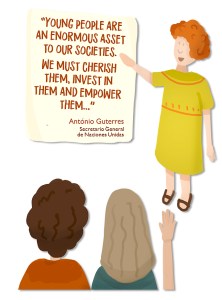

Inclusive and meaningful engagement of youth in evaluation provides an unparalleled opportunity to make development programmes responsive to the needs and demands of the youth. It raises youth voices and agency and recognizes them as active leaders and contributors in building a sustainable world. When the power of youth is harnessed in evaluation through meaningful ways, it can bring innovation, increase evaluation quality, enhance the relevance and the transformational power of evaluation.
There are several ways youth can engage in evaluation: as part of evaluation data collection, providing insight to the evaluation; as young evaluators; as co-creators and co-managers of the evaluation process, involved in the evaluation conceptualization to its dissemination, and as young evaluation advocates.
Harnessing the power of youth engagement in evaluation
In recent times, several agencies and networks are engaging with youth in evaluation, however many times as one-off or short term initiatives. A more holistic approach is needed to amplify this momentum and sustain it in the long haul. So what can organizations and networks do to promote and sustain meaningful youth engagement in evaluation?

It requires a multi-dimensional approach. Sustaining the meaningful engagement of youth in evaluation requires efforts and resources on three interconnected levels.

It requires innovation. Innovation in systems, spaces and approaches in engaging with youth in evaluation is key to translate the intention into real action.


It should be a mutually respectful and inclusive partnership. Create spaces for youth to lead/co-lead decisions, processes and advocacy in the evaluation field.



In conclusion, meaningful engagement of youth in evaluation is a two-way and committed relationship. Recognising the value of youth’s ideas, perspectives, skills, strength and contribution to evaluation is the first step. It also requires a clear resolve and a cultural shift that benefits everyone involved. To do it well, networks and agencies must put in place systems, structures and resources, and should also enable youth to engage meaningfully in evaluation, by building their skills and giving them the space to lead from the front. This approach is a transformative solution that can harness the power of young women and men in evaluation, which in turn can contribute to building a sustainable future for all.