by Alcides Gussi, Marcia Braz & Regislany Morais

This is unsurprising given that the region is the birthplace for major theoretical influences on the topic. Moreover, professional evaluator networks have been established where highly diverse evaluation perspectives are shared, contributing significantly to the construction of knowledge and emphases given in the field of evaluation.
All this context strengthens a rich exchange of knowledge and experience on humanitarian action, evaluation and participation in Latin America. In this article, we will briefly introduce these concepts and invite those interested to get involved in the work developed in Brazil by the Humanitarian Action Evaluation Studies Group.


However, there is no absolute definition that has been agreed upon by the entire humanitarian community and this is due to the complexity surrounding this field, its activities, stakeholders and the objectives it covers. What exists is a common goal of ‘saving lives and alleviating suffering’ (Piñeda & Rodríguez, 2012.p.14).
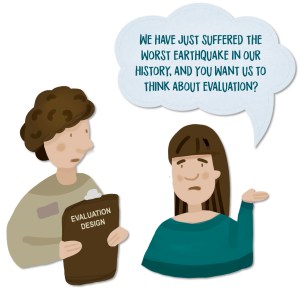
The complexity involved in defining humanitarian action extends to the practice of its evaluation. Humanitarian action evaluation needs to consider the specific complexities of each situation in addition to the response’s goals (often generic), the urgent need for action, insecurity and access issues, polarised contexts, populations that are suffering from trauma, and other unique aspects that are characteristic of the field.


However, experience-based lessons, such as those taken from the evaluation of humanitarian aid provided in Rwanda in the 1990s, require those working in humanitarian action to take into account specific characteristics of this field and incorporate other evaluation criteria specific to its needs such as relevance, efficiency, connectivity, coherence, effectiveness, impact, coverage and coordination.
In terms of objectives, humanitarian action evaluations focus on achieving two central objectives: learning and accountability. Learning is defined as a process in which a humanitarian response experience, and posterior reflection on it, generate changes in actions, improvements and lessons that are incorporated into future responses. In turn, accountability is the means by which ‘power is exercised responsibly’ (ALNAP, 2016). The organisation has to be accountable to external institutions (donors and others), the organisation’s management and stakeholders who benefit from its actions.
Accountability is a major topic in the discussion on evaluation and participation in humanitarian action, both due to the need to justify the effectiveness and efficiency of resource use when accounting for activities before donors; and to fulfil its commitment to present the results of actions to all stakeholders concerned, especially those affected by humanitarian crises.


Brown & Donini (2014) point to some notions of participation in important humanitarian action documents, such as:
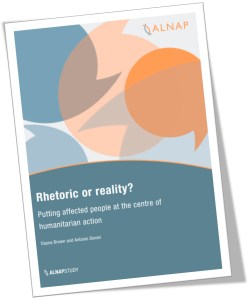



A study by Morais (2020) recognised that the concept of participation in humanitarian action is understood broadly. Rather than there being a single definition, there are various degrees of participation in local initiatives that range from passive to emancipatory. Participation is a goal that humanitarian organisations seek to attain and this desire translates into international commitments and standards that guide humanitarian organisations to achieve better results.
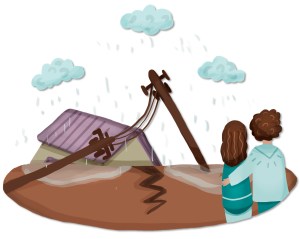

It is also necessary to take into account the capacities and skills of the evaluators working in these contexts, ensuring that, in addition to being knowledgeable about evaluation and participation theories and methodologies, they establish dialogue with populations affected by humanitarian crises and can access prior knowledge regarding the context, the problems faced and relationship dynamics that exist.
The practice of humanitarian action evaluation has its own particularities due to the nature of the field, which requires professionals to have knowledge and skills that go beyond technical qualifications. Humanitarian action evaluations require a comprehensive and in-depth understanding of the concepts and principles governing humanitarian action, the guidelines and regulations that guide work in this field, and above all, the ability to address complex and multi-factorial issues that arise in the context of disasters and armed conflict. Humanitarian action is a significant field of specialisation for evaluation professionals around the world.


In its first year, the Participation and Evaluation in Humanitarian Action training cycle was developed with the aim of fostering debate on the participation of people and communities affected by humanitarian crises in evaluation practices through 10 thematic sessions and workshops, led by invited national and international coordinators and experts. This cycle sought to stimulate dialogue around standards and documents concerning humanitarian action evaluation and share the experiences of professionals and evaluators working in humanitarian contexts. The group plans to expand its work by creating an Observatory of Participatory Evaluation Practices in humanitarian contexts in Latin America, to begin its activities in 2022.