by Silva Ferretti
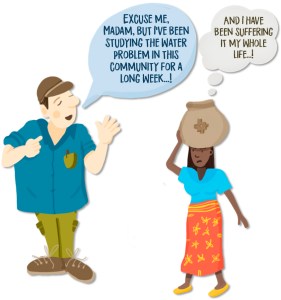

The whole evaluation system pushes evaluators and their commissioner to conform to this stereotype. It seems convenient that, at some point in time, the expert can come in, validate a program and provide the right recommendations and solutions to improve it.
We might delude ourselves by sticking to this stereotype. The world is much more complex, and challenges and solutions much messier than what is written in the manuals. In this context, humility might be a better option than expertise. After all, if people who have been working on an issue for a long time -, with a much better understanding of the context did not find a good solution… – how could an external evaluator do so in the short term allowed?
Humble evaluations recognize that external expertise and status might get in the way. A humble, inquisitive, facilitative stance can go a long way.





A humble evaluation then helps to face new challenges.




The stance of “Evaluator as The Expert” most often is not the best one. Rather than thriving on this authority and expertise, there are many advantages in professing humility. But there are challenges in doing so, as the system operates –by default– on expert mode. Both commissioners and program stakeholders have set expectations on the evaluation role and expertise. Humble evaluations challenge them deeply.
-
- The evaluator is a facilitator, not an expert. This dramatically transform power, dynamics, engagement.
- Trials and errors as well as locally developed options are treasured and shared -rather than emphasizing externally imposed models “by the book”. Evaluation and management shall than be essentially about learning and improvement, not about adherence to the blueprint.
- Clear-cut recommendations cannot be provided by external experts. What matters is to give space to programme stakeholders to make sense of their context, to reframe challenges, to identify possibilities.
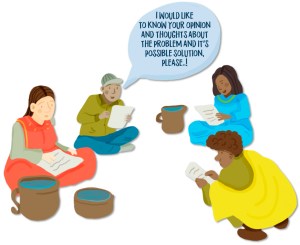

A humble evaluator needs to work hard in the background, to give the floor to the true protagonists of change. And, in doing this, s/he also often has an additional challenge: going against the flow, because of the existing expectations on the evaluator’s role.