by Julia Espinosa Fajardo
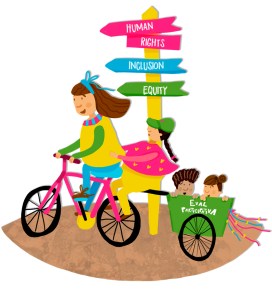

In this sense, it is an opportunity to make visible the different situations of discrimination and vulnerability, and move towards public actions that address these realities to a greater extent and have more transformative power. In this way, participation in evaluation is a key aspect in the process of deepening democracy and ensuring rights, while at the same time, leaving no one behind.
What does EvalParticipativa reveal to us about the Latin American experience in this regard? How can we promote evaluation practices that have a positive impact on rights, inclusion and equity? What challenges are posed in the region?
EvalParticipativa employs evaluation practices that reflect the transformative potential of participatory evaluation. With regard to advancing towards evaluations that positively impact rights, inclusion and equity, these practices underline the need to treat participants as full subjects of rights, and not as objects in need of protection or mere beneficiaries. Participation is related to the democratic function of evaluating public policies (Plottu & Plottu, 2009; Cornwall, 2008; Monnier & Conan, 1995) and recognises people as individuals that can speak and think critically, make decisions and act independently. It also recognises that they have their own interests, expectations and priorities. Therefore, this concept of participation fosters the active involvement of different actors throughout the evaluation process, from the design stage to the sharing of results (Sanz et al., 2019). This active involvement means that those who make the decision to carry out a participatory evaluation have to accept that it means sharing decision making, especially with regard to the evaluation process. In other words, it involves giving up power. At the same time, viewing participants as subjects with full rights also implies recognising their responsibilities.
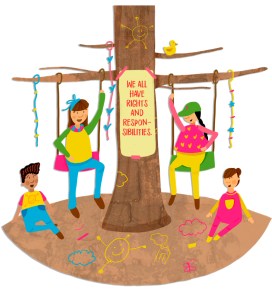

Indeed, not using participatory tools could even be positive if they are only being used as alternative, “enjoyable” ways to impose content and direct evaluation efforts, while only pretending to incorporate the perspectives of local actors. However, tools, workshops and games are central and very important parts of the participatory processes. It is thanks to them that learning emerges from the collective task of “doing together” and of participants committing their “whole self” (not just their thoughts) to the learning process. What is more, this “committing of the whole self” is a strongly Latin American trait, which is seldom valued in evaluation models based on other rationales.
Therefore, participation is understood to be a process that must be both empowering and transformative. The diverse positions and visions held in the evaluation process should be considered and addressed in such a way that the actors are empowered and power relationships transformed. To do this, it is vitally important to recognise the situations of discrimination present (at times, multiple and interlinked) and promote the recognition of different forms of knowledge, critical reflection, negotiation, consensus-seeking, flexibility and creativity.


In this regard, it is always important to remain aware of who is participating, how they are participating, in what activities, what the real participation potential is in each specific case, and how to keep promoting it in order to ensure that human rights, inclusion and equity are upheld. Public institutions must demonstrate an active commitment to this process and also to addressing how the different forms of discrimination, whether socio-economic status, gender, ethnic origin, age etc., intersect in every programme and specific policy, as well as in the evaluation itself.