

by Joselyn Michelle Corrales Vallejo


Leading this participatory evaluation was an invaluable experience both personally and professionally. There were certainly challenges and concerns, but thanks to the dedication and training of a strong team, we were able to turn these obstacles into valuable lessons and best practices. My sincere thanks to everyone who helped and supported the initiative which began when I had the opportunity to learn about participatory evaluation processes in Mexico and Costa Rica through my involvement with EvalParticipativa
Participatory evaluation is built on the principle of ‘Leave No One Behind’ and we thereby sought to ensure that mechanisms were built into the evaluation process to guarantee that the views, comments and ideas of everyone involved were taken into account and reflected in the different evaluation products. This approach undoubtedly contributed to the evaluation’s high levels of participation, making it a model for other countries. This could only happen with strong commitment from both the evaluation team and the beneficiary population, along with the essential step of setting aside our titles and roles to foster a more equal process where we could connect, not just as professionals or beneficiaries, but as people. In my experience, when older adults saw me as a person, it encouraged them to share their realities, feelings, needs, and concerns. This helped build a stronger connection and fostered better communication and collaboration.

Additionally, this evaluation approach highlighted how involving decision-makers from the outset can drive improvements in the service being evaluated, even before it is completed, and allow for immediate changes to be made. Moreover, it provides a foundation for ensuring the results are used effectively, which is the ultimate goal of any evaluation.


One thing I was always clear about is that, as a team of professionals, we were always driven by our concern for the well-being of the older population, especially during the year and a half we spent with different beneficiaries of the service. This approach made the evaluation an exercise in inclusion, respect and appreciation for the older adult population living in conditions of poverty and vulnerability—groups often overlooked in the design and evaluation of public policies.
Finally, I would like to express my particular gratitude to the Focelac+ project’s technical team and the EvalParticipativa community of practice and learning. Their support proved to be indispensable in implementing the first participatory evaluation in Ecuador. The team leading this Ministry of Economic and Social Inclusion intervention was supported with capacity-building sessions. Andrea Meneses (Deval) and Carmen Lucía Jaramillo (external facilitator) also provided guidance throughout the whole process. Both were always helpful and willing to share their knowledge with us. At the beginning of the evaluation process, Esteban Tapella and Vanesa Castro of the EvalParticipativa technical team facilitated a training session on conceptual and methodological issues concerning participatory evaluation. This training was intended for staff at the Ecuadorian Secretariat of Planning and the Ministry of Economic and Social Inclusion, while an introductory workshop on evaluation was also offered to the older adults who participated in the evaluation team.

I hope that many other countries will be able to draw from this experience and carry out similar evaluations. This approach undoubtedly ensures that evaluation recommendations are effectively implemented, as they are deeply grounded in the stakeholder community and shaped by the realities and needs of the beneficiary population.
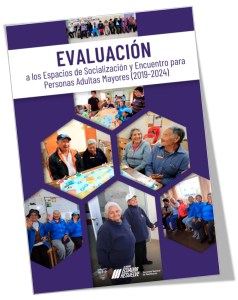
The evaluation report (only in Spanish) can be accessed here.
In the following video (Spanish with English subtitles), you can watch some key moments in the evaluation process and hear testimonies from facilitators and beneficiaries.


