by Gereltsetseg Adiya, Oyuntulkhuur Jukov, Itgemjit Gankhuyag and Azjargal Amarsanaa
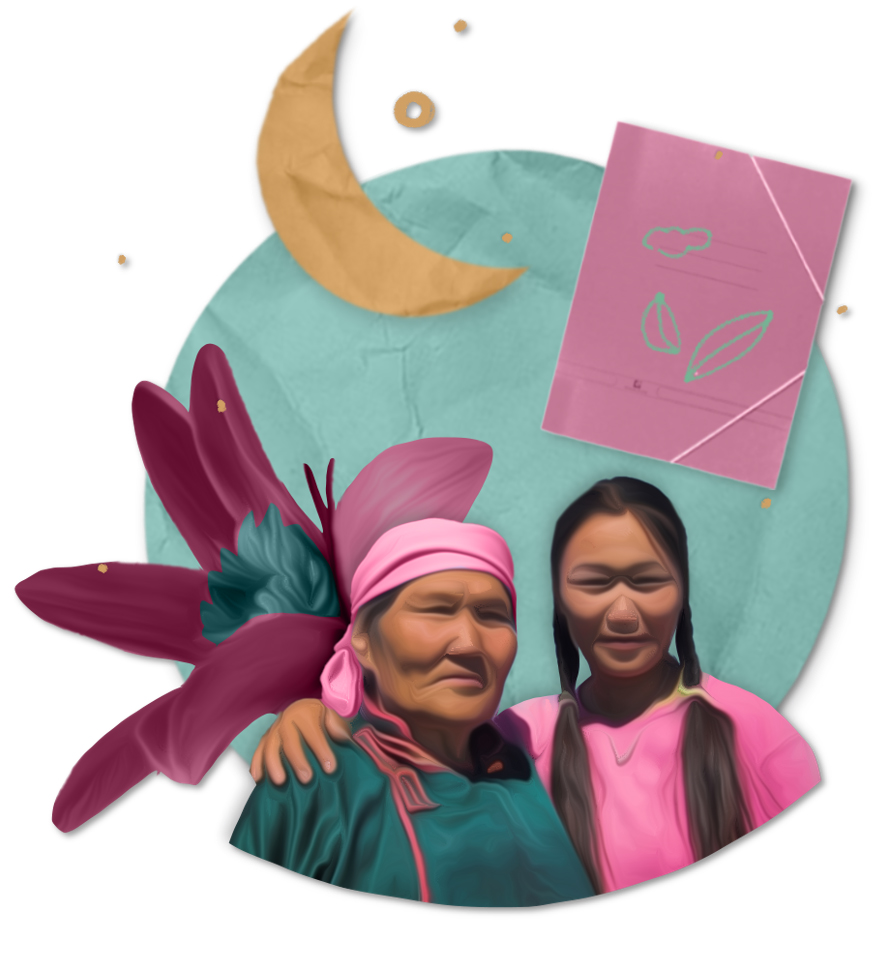 With the enforcement of Mongolia’s Law on Special Protected Area (*), 97% of Tsagaannuur soum in Khuvsgul province where the Tsaatan live has been declared a strictly protected zone. This has placed major restrictions on their traditional way of life: hunting, seasonal migration, reindeer herding, and pasture use have all become increasingly limited. These restrictions directly affect their food security, cultural traditions, and quality of life.
Recognizing that the Tsaatan voices have been systematically excluded from designing, implementing and evaluating policies, this participatory and culturally responsive evaluation demonstrates how meaningful participation can transform the evaluation of conservation policies – by centering Tsaatan people’s traditional knowledge and ensuring their perspectives directly shape evaluations and are considered in policy making, that affect their ancestral lands.
Who the Tsaatan Are
The Tsaatan, also known as the Dukha, are one of the smallest minority groups in Mongolia. They live in the remote taiga forests of the northern Darkhad Valley, near the southeastern border with Siberia. The Tsaatan are the last reindeer-herding community in the country, and as of November 2024, their population was just 427 people across 123 households. This makes them not only one of the smallest, but also one of the most culturally unique groups in Mongolia.

The exact time when the Dukha (Tsaatan) arrived in Mongolia varies depending on different sources. According to Wheeler’s research, Russian travel notes indicate that Turkic-speaking Tuvan people had already settled around the eastern and western parts of Lake Khuvsgul in the early 1600s (Wheeler, 2000).
Later, during the Soviet era, Tuva was incorporated into the USSR, which changed historical territorial divisions. In 1985, the Mongolian government officially reorganized the Dukha for administrative purposes by merging them into a new administrative unit—Tsagaannuur soum—bringing together the Rinchinlkhümbe and Ulaan-Uul groups. This reorganization divided the Dukha into Eastern and Western Taiga groups.
Cultural Identity and Terminology
The word “Tsaatan” literally means “the people who herd reindeer.” This name is widely used in government documents and research, but the community itself does not necessarily define itself this way. When working with Indigenous peoples, it is important to show respect and use terminology carefully, because using names and terms that the community recognizes and values helps build trust and ensures that processes align with their values and worldview. That said, in this evaluation, we refer to the participants as “Tsaatan” to highlight their primary livelihood and cultural connection to reindeer herding.
How the Evaluation was conducted
The evaluation was conducted in November 2024 and facilitated by a research team composed of three researchers and evaluators from the Mongolian Evaluation Association. Within this exercise, we aimed to explore the situation using a participatory and culturally sensitive approach by applying the Indigenous Evaluation Toolkit for the Asia-Pacific region (link here). The following methods were used in the evaluation: a questionnaire based on the core criteria of OECD, and a qualitative research approach with observational methods. Our approach focused on:
-
- Respecting and understanding the culture, traditions, and customs of Indigenous people,
- Building trust and gaining acceptance by following ethical principles,
- Providing training to build knowledge and enable the participation of Indigenous people in the evaluation process, and
- Engaging Indigenous people in sharing and disseminating the evaluation findings.
The main goal of this evaluation was to listen to the voices of the Tsaatan community and to understand how land protection policies affect their quality of life, cultural heritage, traditions, and safety in their homeland — particularly in Tsagaannuur soum, Khuvsgul province, within the Eastern and Western Taiga regions.
For this evaluation, we brought together a diverse group of 25 participants: elderly men and women, young Tsaatan representatives (both male and female), as well as representatives from local government, environmental protection, and social work sectors.
The evaluation has shown that Tsaatan people currently face several challenges related to land use and protection policies. First, the safety of reindeer herders was compromised because the policy prohibited the use of dogs, sticks, and guns for the protection against dangerous wildlife. Second, strict land-use regulations (fines, confiscation etc.) have led to increased pressure on the Tsaatan, creating fear and anxiety among herders due to unlawful house searches. Those fines and other financial penalties further undermine the Tsaatan’s economic stability and exacerbate the negative effects of land-use. Third, while the Mongolian government provides monthly allowances and support for education, health, and social protection, these compensations can inadvertently limit the Tsaatan’s ability to advocate on other social issues or engage in full-time work. Finally, these measures limit traditional livelihoods, hinder cultural practices, disrupt the traditional way of life of the Tsaatan, and cause them to feel isolated, powerless, and alienated from their identity and traditions, which impairs their well-being.
Beyond the Results: Why participation mattered
The evaluation focused on the traditional lifestyle of the Tsaatan people — including reindeer herding, hunting practices, and seasonal migrations. It also examined the implementation of government programs and policies aimed at restoring reindeer husbandry and improving the livelihoods of the Tsaatan people living within protected areas. These policies have created challenges such as safety risks, conflicts with authorities, psychological and emotional stress, and issues with government support (see above).
 By listening to the voices of the Tsaatan, the evaluation helped plant the seed of participatory and evaluative thinking — encouraging them to understand how they can influence the policies and programs that affect their lives and communities.
The capacity-building training on participatory evaluation became an important first step in empowering the Tsaatan to have a say in decisions that impact their land, culture, and way of life. This “sowing of knowledge” gave them, for the first time, the opportunity to reflect on and evaluate the policies shaping their future. The training was facilitated by Gereltsetseg (a member of the research team) and covered topics on Participatory Evaluation and Monitoring. A total of 16 people participated, including Tsaatan Indigenous people from the Western and Eastern taiga and the Governor of the 3rd bag.
As a result, the Tsaatan community began to feel more confident in voicing their opinions, submitting petitions, and protecting their cultural heritage. It also inspired them to demand respect for their rights, culture, and traditions in any policy or program implemented in their homeland.
Moving forward
While protecting the environment is essential, it is equally important that policies respect Indigenous rights and do not harm their livelihoods or well-being. Collaborative, participatory, and culturally grounded solutions that value traditional knowledge are vital to improving the quality of life of the Tsaatan people in a sustainable and holistic way.
Our next step is to build the evaluation capacity of the Tsaatan community by training them in evaluation methods and empowering them to take part in future assessments. We also aim to engage evaluation professionals to share their knowledge and experience through EvalIndigenous collaboration. In addition, we have established an EvalIndigenous Topical Interest Group (TIG) under the Mongolian Evaluation Association (MEA: here ). As a result of this initiative, we hope that this seed action will lay the foundation for evaluative thinking among the Tsaatan people and inspire the emergence of Indigenous evaluators within their region.
While this reflection captures the key lessons from our participatory approach, the complete evaluation report provides the full picture of our findings and methodology. You can access the comprehensive document full report for a detailed look at this evaluation experience.

(*) Mongolia’s Law on Special Protected Areas, first enacted in 1994, established several conservation zones, including the Tengis-Shishged National Park and the Ulaan Taiga Strictly Protected Area. In 2003, a portion of the Tsaatan people’s traditional territory within the Ulaan Taiga region was designated as a Natural Complex Area to protect its rich glacial and ecological systems. Later, in 2011, its status was elevated to a Strictly Protected Area, expanding the total area to 434,900 hectares and effectively designating.