OPEN CALL
 A while back, we began working with colleagues in the region on the concepts of evaluation, inclusion and democracy in Latin America and the Caribbean. In the new EvalParticipativa project (2023-2024) we plan to revisit these ideas and produce a book on the subject. Our aim is to identify participatory evaluation experiences in Latin America and the Caribbean, analysing dimensions of inclusion and democracy, and emphasising the learning components generated by these experiences.
The book’s target audience is made up of individuals who are responsible for designing and carrying out evaluations, in the hope of increasing their awareness of the possibility and feasibility of conducting evaluations with civil society participation. We seek to bring this awareness both into their consciousness and onto their agendas. The book is intended for Latin American bodies that provide capacity building and training in evaluation, in the hope that it will make available real cases of evaluations carried out with the participation of civil society in the region. Our target readers are teachers and students in diploma courses, master’s degrees or other specialisations focused on evaluation and social planning, in the hope of influencing the training of professionals who will in the future be conducting, commissioning, supervising and assessing participatory evaluations in the region.
how to participate?
In this document we present a general, preliminary overview of the aspects we intend the book to address. We are clear that the focus should be on presenting one or more existing evaluation experiences as the core data for analysis, without excluding the possibility that some general remarks or proposals may be added where appropriate. In other words, a substantial part of each chapter should be devoted to a descriptive and analytical account of one or several evaluation experiences, while a smaller part may be dedicated to more general or propositional reflections that build on the first section.
 This brief post is therefore an invitation to friends and colleagues of EvalParticipativa who are interested in contributing a chapter to the book to email their ideas to eval.participativa@gmail.com.
We will select the chapters that will be included in the book from the submissions we receive. We thank you in advance for sharing this announcement with colleagues and contacts interested in these topics.
Best wishes,
The EvalParticipativa team
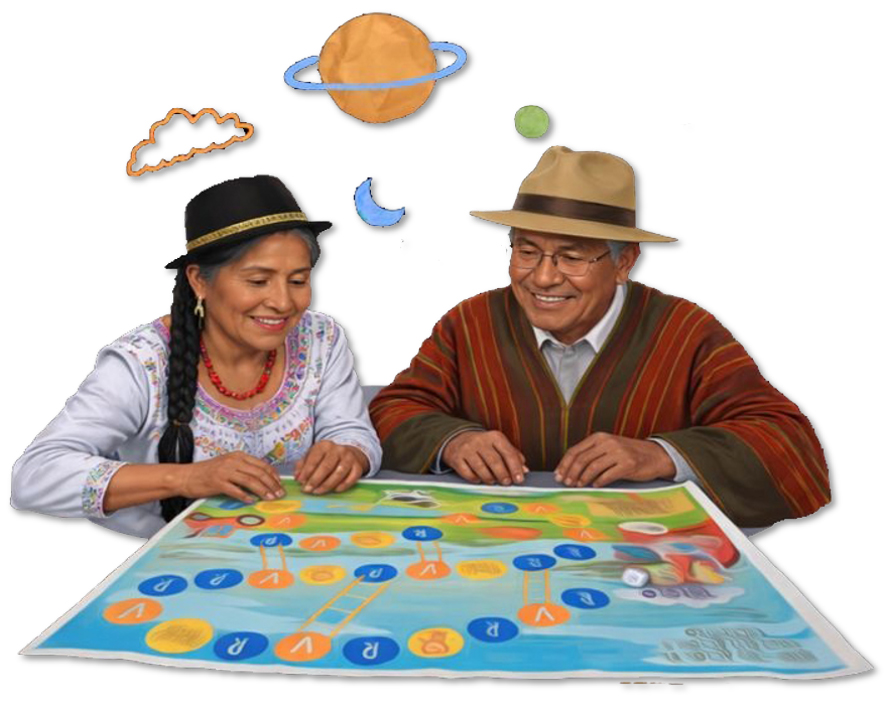
 Over the past two decades, the movement aimed at achieving evidence-based policies has gained importance and prominence. It holds that policymakers should base their decisions on the best available evidence regarding “what works,” rather than on ideologies or in response to particular interests.
 When I wrote
  From very early on in my professional training, I saw human rights as a tool for challenging and transforming ethically unjust realities. Accordingly, when I graduated as a psychologist, I did not focus on addressing people’s suffering on an individual basis, but rather on understanding it in its collective dimension, designing strategies that sought to transform the social conditions that generate this discomfort.
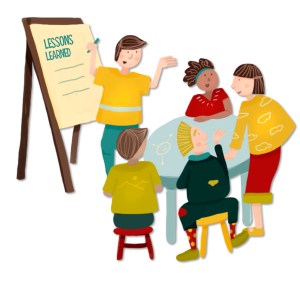 The term “experience capitalisation” is increasingly used to refer to the process of describing and analysing a project, programme or specific experience in detail, and producing lessons that can be shared and used to improve development interventions.
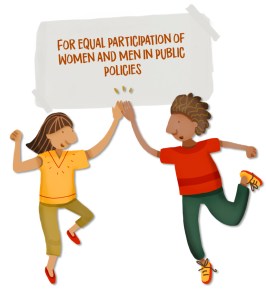 Citizen participation is the best way to achieve social inclusion. It is, after all, one of the goals included in the UN’s Sustainable Development Agenda (SDGs). More specifically, it aims to promote peaceful and inclusive societies that can achieve sustainable development, facilitate access to justice for all people, and build effective, inclusive and accountable institutions at all levels. Gender equality is another important goal to ensure the full and effective participation of women and equal leadership opportunities at all decision-making levels in political, economic and public life.
 As outlined in the