by Juan Murciano
 In this post, I will present a tool that has been designed to help people talk about their projects by answering important questions that underpin their intervention’s Theory of Change (ToC).
What is a Theory of Change?
A project’s ToC is a collection of ideas that, on the one hand, seeks to explain the different reasons why an intervention is necessary, and on the other, describes how this intervention is going to solve the problems that have been prioritised. It is a detailed description of how and why the project designers think a project or programme will produce specific changes or impacts. It includes an analysis of the contexts, assumptions, interventions and impacts that are expected in the long-term.
Also known as ‘results chains’, ‘logic models’, ‘program theories’, ‘outcome mapping’, ‘impact pathways’ or ‘investment logic’, ToCs are used to make the logic behind the existing strategies of an organisation explicit. A ToC is a creative process which opens up the potential of a project. It allows a group of stakeholders connected with a project to order their thoughts and use their existing knowledge and experience to identify the conditions that are required to achieve the desired change.
A ToC is key to ensuring that a project is well designed and that its objectives are attainable and measurable. It usually takes the form of a set of assumptions and projections about how the situation might unfold in the near future, with a particular focus on the period following the launch of a specific intervention. It is therefore a thinking and action approach which helps identify the milestones and conditions that are critical along the path to the desired change.
Purpose
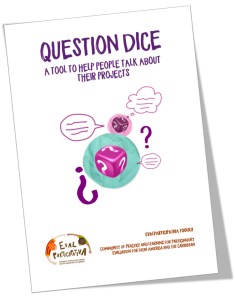 Frequently, the different stakeholders linked to an intervention have no clear understanding of the ToC that underpins their project. It is also common to find more than one ToC behind a programme, which are sometimes complementary and at other times contradictory. It is also often the case that a project’s ToC has not been made explicit to all stakeholders with the result that it is difficult for them to understand what the intervention is about, why it is being implemented, what should be achieved in the short-, medium- and long-term, who should benefit and what the shared assumptions behind it are. This tool seeks to make the ToC of a project explicit by sharing the perceptions on it held by different stakeholders.
How to play
The game can be played in two ways: (1) to reconstruct a project’s ToC with a group of different stakeholders linked directly or indirectly to the same intervention; or (2) to help people connected with different projects share their experiences; in other words, to help each person share information about their project.
 In both cases, the game is intended to help participants reflect on the following questions that are important when planning any intervention: WHAT?, WHY?, HOW?, WHAT FOR?, WHO WITH?, and WHO FOR?
-
- The WHAT questions refer to the characteristics of the intervention: what is the project about?; what actions/activities does it do?; what services does it offer?
- The WHY questions refer to the issue that the intervention is seeking to address and the problems and needs that necessitate the project.
- The HOW questions are linked to the project’s methodology, the way of working, and the manner in which the intervention intends to move towards a solution for the problem that has been prioritised.
- The WHAT FOR questions refer to the intended achievements of the intervention. These can be subdivided into three levels: (1) OUTPUTS: direct and immediate changes, tangible results derived from the activities carried out; (2) OUTCOMES or RESULTS: intermediate changes (mid-term) for which the intervention is entirely responsible; and (3) IMPACTS: general or overall objectives, long-term transformations to which the intervention contributes but is not wholly responsible.
- The WHO WITH questions refer to the group of people or organisations that are carrying out the project, or participating in it.
- The WHO FOR questions refer to the target population. In other words, those who benefit from the project and are the reason for the intervention.
You can download the game instructions and the dice template, which can be printed and cut out.
Recommendations
This game has been used in various settings, enabling a wide range of stakeholders to agree on which evaluation topics and questions to prioritise, which parts of the ToC are clear and which are not, and which aspects should be prioritised when evaluating a programme.
When using the game it is particularly important that an appropriate key stakeholder map has been created beforehand. The exercise should involve a broad group of people who represent the diversity of individuals associated with the intervention, including the beneficiary population, local staff responsible for implementing the programme, senior leaders, local partners, evaluators if they exist, etc.
Another issue to bear in mind is that, if the tool is to produce high quality results, enough time has to be dedicated to the exercise. Participants need to be able to take their time to enter into dialogue and express all their concerns. This process will help participants translate their ideas onto cards that can be stuck to the petals of a flower, completing it, so that at the end of the game, it provides a visual summary of the ToC of the programme or project.
Finally, it is important to adapt and redesign the game to suit the needs of each situation. For example, the questions on the dice can be changed to specific topics that are relevant to the intervention. Rather than questions, proposals could also be used in order to spark debate on specific topics.
In the following video (English subtitles), Juan Murciano tells the origin of the game, illustrating its development and modalities of use. At the same time, he offers some recommendations for its adaptation to different groups and contexts.