by Carmen Lucía Jaramillo
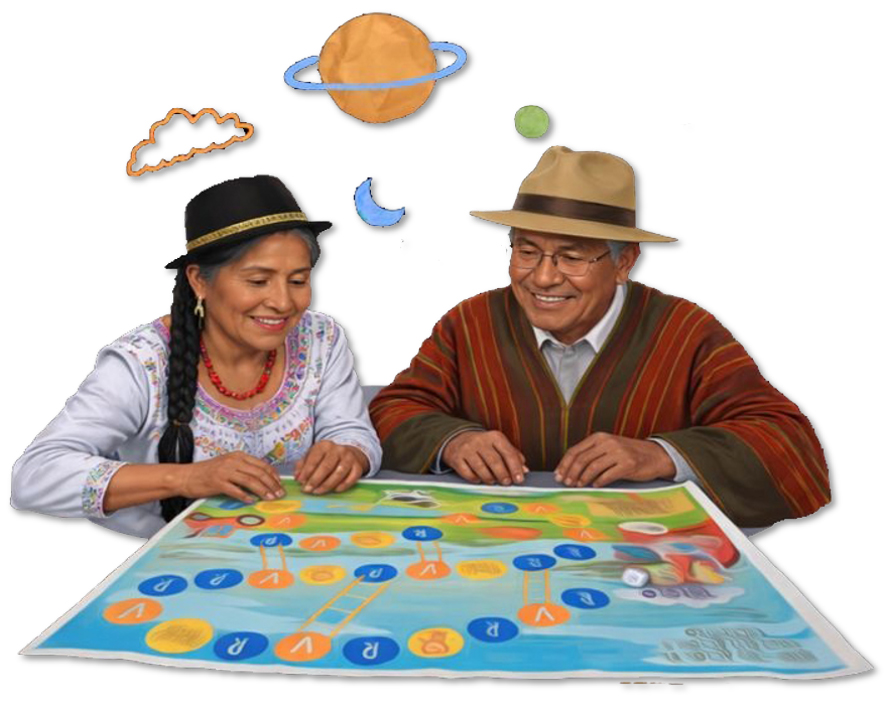
The invitation we received to share the experience of designing the first participatory evaluation promoted from within the public sector in Ecuador represented a challenge both for me, as the facilitator of the process, and for Joselyn Corrales, who at that time was serving as Undersecretary for Evaluation in the state body responsible for evaluation.
The challenge lay in communicating clearly not only the methodological and conceptual aspects, but also the uncertainties, challenges and lessons learned arising from the design of the participatory evaluation of the Socialisation and Meeting Spaces for Older Adults, an intervention implemented by the Ministry of Economic and Social Inclusion.
This process involved weaving relationships of trust within the evaluation team, which, as is appropriate in a participatory exercise, had a diverse composition. We gradually came together as a team through a shared human sensitivity towards the issue of care for the older adult population. From that starting point, we were able to recognise and value different perspectives, as the team included representatives from various public institutions, academia, civil society and service users.
As facilitator, I was aware that the active involvement of older adults living in conditions of poverty and vulnerability constituted, in itself, an exercise in inclusion, respect and appreciation of their contributions. However, achieving this required overcoming several challenges, such as fostering, in a short period of time and through practice, a minimum level of shared understanding about evaluation. In addition, it was essential to establish horizontal relationships within the team, based on mutual respect and recognition of the knowledge and experience of all those involved.
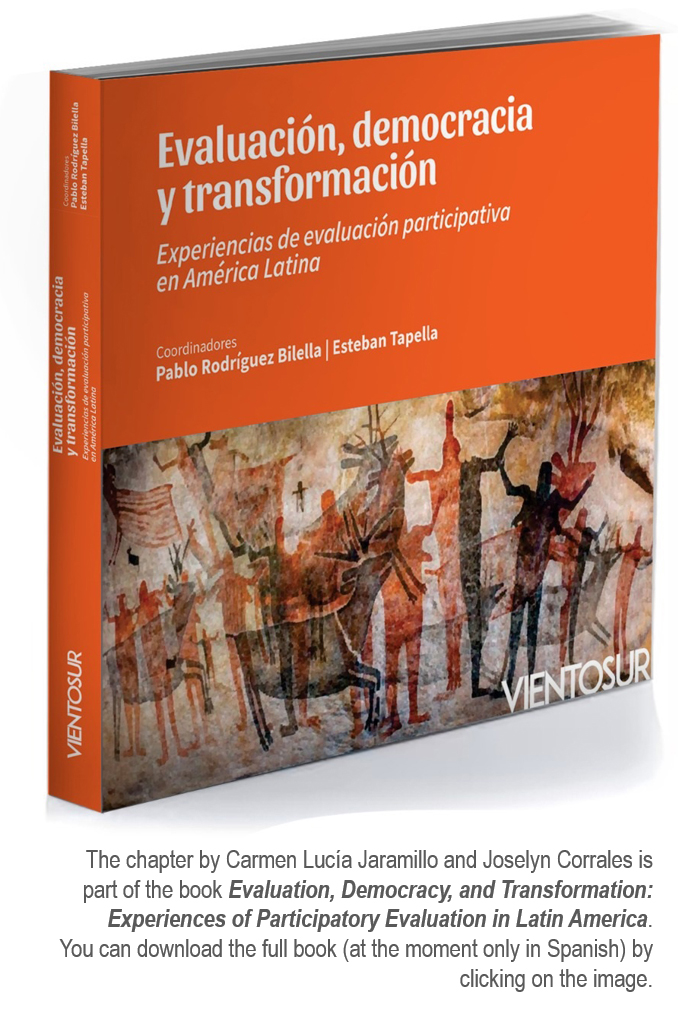 The chapter 10 of the book describes the process of designing the participatory evaluation, presenting it as a practice-based reflective exercise. It is an invitation to immerse oneself in the experience we lived, in order to identify opportunities and challenges that readers may encounter in other participatory evaluations.
One of the defining features of this process was the inductive definition of the evaluation objectives and questions. In the initial workshop, we focused on “what to evaluate and for what purpose”, establishing this structure as the basis for the objectives. Evaluation criteria were not the starting point; they were defined later, drawing on the results of that exercise.
Another key feature was the integration of academic and technical knowledge into the design process. The fact that this was a participatory evaluation did not mean that it was carried out exclusively by service users. The contributions of the two geriatricians who were part of the evaluation team were decisive in professionally and accurately “interpreting” the needs identified by the rest of the team (including the older adults). This was crucial in identifying the aspects that needed to be evaluated in order to generate sufficient information to support decision-making aimed at improving services for the older adult population.
In this respect, the use of language became a fundamental aspect from the outset. Using simple words and drawing on analogies to explain issues to older adults was not merely a matter of style, but a communicative strategy aimed at ensuring debate on an equal footing, which entails respecting people’s capacity to understand the issues under discussion. Likewise, communicating to decision-makers what was to be evaluated and how the results would be used required clear expression in technical language that was nevertheless accessible. For this reason, an exercise in “translation” of the evaluation objectives was undertaken, producing two versions without loss of rigour: one aimed at service users and the other at institutions.
Finally, throughout the chapter there runs a common thread of reflection highlighting the importance of the human factor as key to achieving a truly participatory design. As mentioned in the introduction, writing this chapter was also a gesture of gratitude towards the people who committed themselves to the design of the evaluation. Speaking of commitment is not merely a rhetorical device: the most wonderful aspect of facilitating this process was encountering women and men who, over those six weeks, placed their knowledge, life experience and, above all, their sensitivity at the service of building together an evaluation proposal that could genuinely be useful for the older adult population. That was always our shared objective.