by Jorge Chavez-Tafur
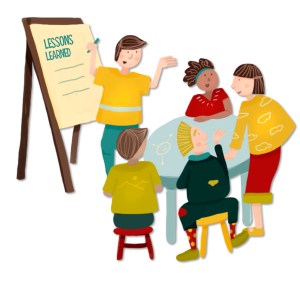 The term “experience capitalisation” is increasingly used to refer to the process of describing and analysing a project, programme or specific experience in detail, and producing lessons that can be shared and used to improve development interventions.
As in a systematisation process, this approach is believed to help identify specific innovations and practices, and -above all- to understand the reasons behind their successes or failures. One of the major benefits of an experience capitalisation process is that it involves all those who are -or were- part of the experience.
But how do we promote such a process, and what are the steps to be followed? And once we have decided to go ahead, how do we facilitate the participation of different people? These were some of the questions that we asked ourselves at the Technical Centre for Agricultural and Rural Cooperation (CTA) about five years ago, prompting us to initiate a project together with the Inter-American Institute for Cooperation on Agriculture (IICA) and the United Nations Food and Agriculture Organization (FAO). Financial support was provided by the International Fund for Agricultural Development (IFAD). From 2016 to the end of 2019, the project responded to the need to develop specific skills for describing and analysing specific experiences, identifying and disseminating lessons and recommendations, and putting these to use. Working in different parts of the world and focusing on analysing the steps that should be taken in processes of this kind, the project sought to encourage the adoption of a capitalisation process at different levels. To this end, we sought to capitalise on the experience we had embarked upon, to learn lessons about the process itself and to validate the approach followed.
 Creating spaces where -regardless of their levels of education- people feel they can truly participate in planning and evaluation processes, in an informed and active way, has been a principal methodological concern during my work with communities, particularly in rural areas.
 In order to build a solid framework and evidence, state-led evaluations have become more standardised over time, and are thus increasingly gaining in credibility. The problem that remains is the need to recognise that not all public programmes share the same characteristics, and therefore differentiated types of evaluations should be considered.
 Entreculturas is a Jesuit-sponsored international cooperation NGO that works to promote justice and social transformation. It defends education as a human right and upholds the right to a dignified life for migrants and refugees. It also seeks to construct committed global citizenship, gender equality and the reconciling of humans with nature. It seeks to contribute to the development of the most vulnerable communities, appealing to values such as solidarity and equal rights, and involving all types of stakeholders (citizens, companies, governments etc.) that share the responsibility of tackling these global challenges.
 In this article, I’m going to share some thoughts concerning a systematisation experience that involved stakeholders with varying degrees of training. I will draw particular attention to the engaging tools used to promote analysis and reflection.
 Costa Rica’s Caribbean coast is known for its lush green landscapes, beautiful beaches and friendly people. But, unfortunately, it also stands out for its high incidence rates for several kinds of cancer. This prompted the region’s Health Boards (local bodies who monitor the quality of health services) to request an evaluation of cancer care and prevention services, taking advantage of the fact that at the time there was an open tender organised by the Costa Rica Ministry of Planning (MIDEPLAN) and the German cooperation programme, FOCEVAL to support capacity strengthening in evaluation.
 Conventional evaluations have got us used to the users or beneficiaries of the programs and public policies becoming involved only as key informants. In a participatory evaluation the parties involved are the protagonists of the whole process. They define who will participate, what will be evaluated and when, what data collection and analysis methods will be used and how the results will be communicated.