by Dagny Skarwan
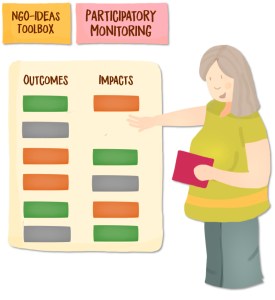 The need to carry out an evaluation in order to discover what results have been achieved by an intervention is appreciated by organisations, projects and the teams responsible for implementing them. In turn, monitoring is often linked to accountability, generally through a weekly or annual report.
Moreover, in the field of NGOs, monitoring is usually understood as reporting activities, in other words, accounting for everything that has been done, within a set period, in relation to the operational plan.
Even when projects have a logical framework or results matrix, and even when they have developed a theory of change, it is not unusual for organisations and local teams to be surprised by the instruments they come across when they start getting involved in participatory monitoring of outcomes and impacts. In this type of monitoring, I usually help teams reflect on how outcomes are measured, how impacts can be recognised and measured, and -from there- recognise the different contributions of the project. Questions also arise concerning the purposes of monitoring that go beyond the need of a project coordinator to provide accountability, and include questions such as where to start when monitoring a project and how to know when it is the right moment to do so.
 In participatory evaluation, people and their diverse needs are put at the centre of evaluation processes, and consequently, public policies and programmes. The active inclusion of the different voices throughout the whole evaluative exercise opens up a space to highlight the violation of rights, processes of social exclusion and the structural inequalities that exist in each context.
 The Country Partnership Framework, hereafter CPF, (MAP in Spanish) is the tool used by Spanish Cooperation, hereafter SC, for bilateral geographic strategic planning to ensure that SC actions contribute to sustainable development. Through the CPFs, dialogue is established between SC and the partner countries to benefit the development strategies and plans of these countries.
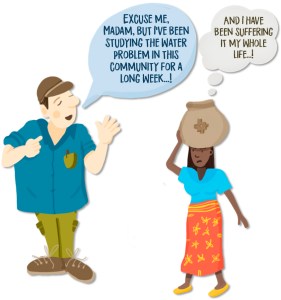 The stereotype evaluator is an expert. S/he can capture, scientifically, what doesn’t work in a program. S/he can provide wise recommendations to fix issues… and manager shall respond to them! It is a position of professional authority.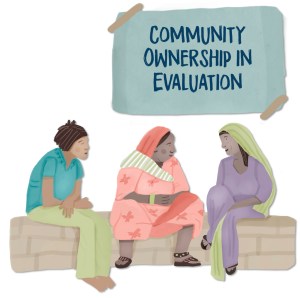
 Entreculturas is a Jesuit-sponsored international cooperation NGO that works to promote justice and social transformation. It defends education as a human right and upholds the right to a dignified life for migrants and refugees. It also seeks to construct committed global citizenship, gender equality and the reconciling of humans with nature. It seeks to contribute to the development of the most vulnerable communities, appealing to values such as solidarity and equal rights, and involving all types of stakeholders (citizens, companies, governments etc.) that share the responsibility of tackling these global challenges.
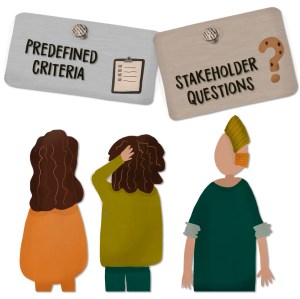 For a while now, I have been pondering some key aspects that, in my experience, shape Monitoring, Evaluation and Learning (MEL) practice in the Global South. It is within this context that I have decided to set out some ideas that could be incorporated into practice criteria. One of the ideas that I have focused on is the existing tension between the increasingly felt need to ensure that all voices are heard in the evaluation process and predefined evaluation criteria, both in terms of their content and use.
 CRIA stands for Consorcios Regionales de Investigación Agropecuaria (Regional Consortia for Agricultural and Livestock Research). The CRIA program began in 2016 with the goal of improving agricultural and livestock research capacity across inter-organizational consortia in Guatemala. The program has been funded by the United States Department of Agriculture (USDA) and implemented by the Ministry of Agriculture, Livestock and Food (MAGA) and the Inter-American Institute for Cooperation in (IICA).
 Every society that is victim to successive moments of crisis is severely marked and affected by previous ruptures to the terms of basic social contracts, whether economic, political or legal. In many Latin American and Caribbean countries, political institutionality is largely discredited due to the questions that surround it. Public opinion in general clearly rejects the current, past and future ruling classes. This communicates a lack of trust in political representatives and especially toward democratic institutional mechanisms that organise public activity.
 was first introduced to participatory evaluation in Nicaragua. Like many people educated in the United States, I was trained in Western approaches to evaluation and research originating mostly from the social sciences. When I began working in monitoring and evaluation at a small NGO in Managua, it felt as though none of that training was relevant – largely because it was not. I did not fully understand at the time, but I now realize it was because I was trained in an epistemology or way of viewing the world that was largely out of touch with the local culture and context of the remote, rural communities where my team members and I supported health promoters to provide basic medical care in their communities. We used participatory approaches and methods including Photovoice, the Most Significant Change Technique, and Appreciative Inquiry.