 One of the challenges of participatory evaluation is that of including a broad diversity of stakeholders, many of whom have no training or previous knowledge of evaluation.
In this testimony Olga Nirenberg highlights the importance of the tools and techniques employed. These must be at the same time effective in tackling the topic and simple so as to be within the reach of all the participants. Including the voices of a vast and diverse array of stakeholders in the process is the best way towards a useful, transformational and high quality evaluation.
Olga Nirenberg has a PhD in Social Sciences (UBA, 2005) and a diploma in Public Health (UBA, 1976). A founding member of the Local Development Support Centre – CEADEL -(https://ceadel.org.ar, 1986 – 2020), she developed the Self-Assessment Tool for Education Quality project – IACE- (UNICEF/CEADEL, 2007-2017). She has worked as a consultant/evaluator for UNICEF Argentina, the ARCOR Foundation, the Pan American Health Organization (PAHO), the World Health Organization (WHO) and the W.K. Kellogg Foundation. She has also worked in different social areas of the national government in Argentina. She has been an evaluator of extension projects and a teacher in both public and private universities and has published books and articles on social planning and evaluation. She is a member of the Argentine Network of Evaluation (EvaluAR) and of the Latin American and Caribbean Monitoring, Evaluation and Systematization Network (ReLAC). She is currently collaborating with the EvalParticipativa initiative.
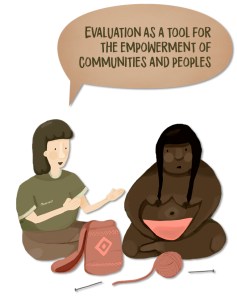 I am Métis which is one of the three recognized Indigenous groups in Canada, the other two groups are First Nations and Inuit. As an evaluator I have had the privilege to work with dedicated people across Canada and internationally who are trying to improve and empower their communities. I believe evaluation is a tool for use in the empowerment of communities and peoples. For too long evaluation has been used as a tool to help maintain and justify a colonial and paternalistic approach to Indigenous communities. Transient evaluators, not familiar with the cultural, political, and social histories of the communities, have arrived in Indigenous communities to evaluate programs about which they are unfamiliar. Furthermore, they do not understand or follow community protocols. For too long evaluation has been an extractive process which has taken from the communities often giving nothing back in return. This has led me to advocate for Indigenous communities to take control of their evaluation agenda. I have outlined some things I have found that helps me when undertaking evaluation with Indigenous peoples and communities.
 In this contribution to EvalParticipativa I will describe the characteristics of the empowerment of multiple stakeholders during participatory evaluations. But first I should clarify what I understand by participatory evaluation (PE).
 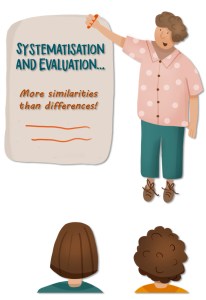 As I mentioned in my brief comment on the article published the 22nd of March on EvalParticipativa, “
 In Latin America and the Caribbean, the systematisation of experiences approach is widely known
 Participatory evaluation (PE) has been near and dear to our hearts for a very long time. One of us (Cousins) has been writing about this topic for almost 3 decades. While our contributions have been mostly research on PE, we’ve always had an interest in translating research-based knowledge into practice. What an amazing opportunity EvalParticipativa provides in this regard! But perhaps even more compelling is the reverse; what a fabulous opportunity to turn expert practice into research! Lessons learned will surly advance evaluation theory and practice.