 Storytelling is a universal human practice that has accompanied us throughout history. Through narrative, cultures communicate, educate and entertain — but they also transmit values, knowledge and collective memory. While it may seem simple, storytelling is a complex art that has evolved over time and continues to adapt to contemporary contexts and challenges.
With the aim of exploring these transformations and strengthening storytelling capacities, at the beginning of 2025 we launched the series INVISIBLE STORIES MADE VISIBLE: STORYTELLING IN AFRICA. This initiative brings together artists, scholars and communities to share experiences, techniques and approaches to storytelling. It offers a space where storytelling intersects with participatory evaluation and knowledge communication.
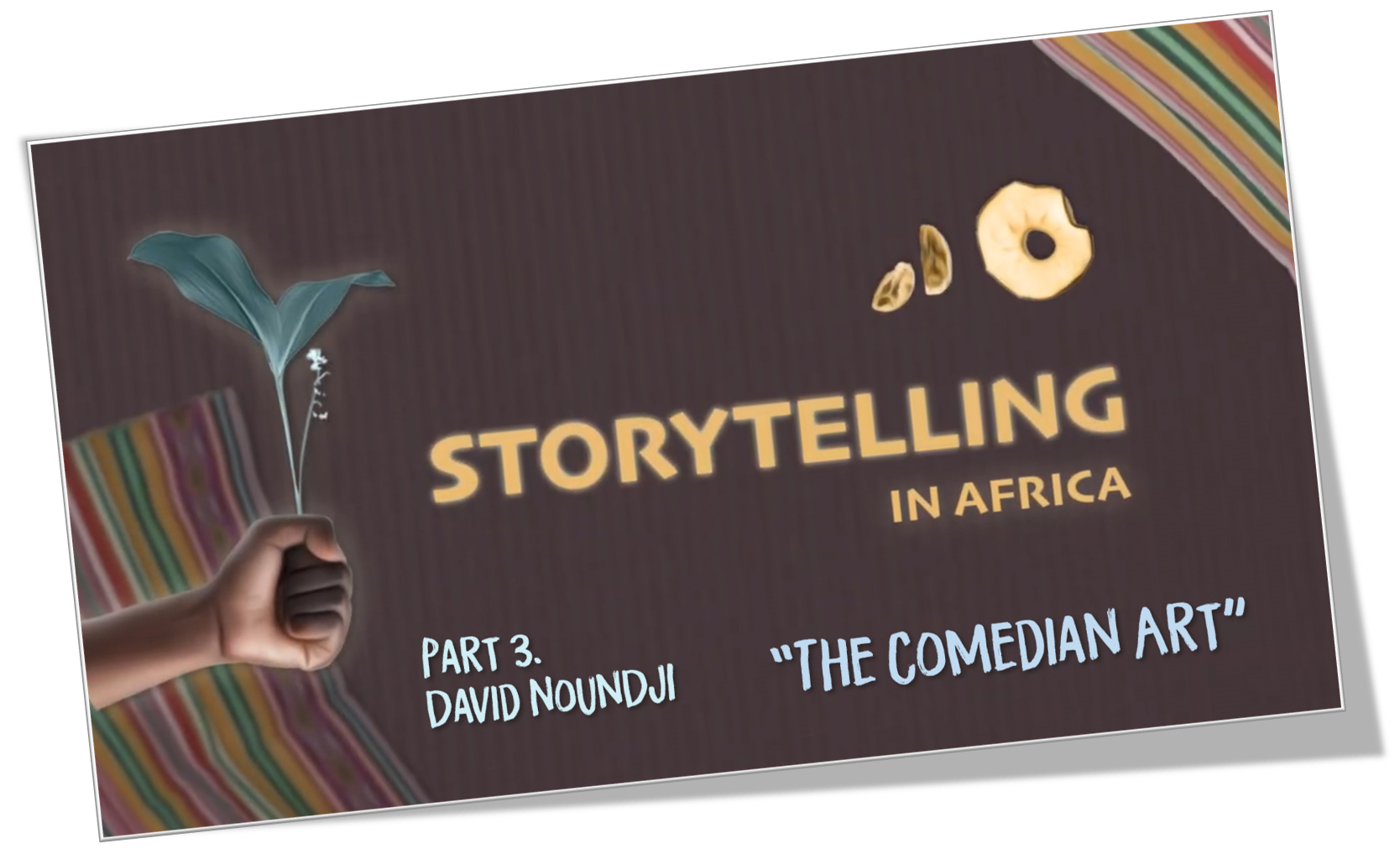 The third episode, titled “The Art of Comedy“, features the testimony of David Noundji — a Cameroonian actor, oral storyteller and retired regional pedagogue. His experience highlights how comedy and theatre can be powerful tools for telling stories of social change. Noundji is well known for reclaiming conte —the traditional African storytelling form— as a method for education, science, and social communication.
As the founder of the cultural space Zingui, David has trained young people and artists in storytelling techniques from an African perspective. His centre also hosts international residencies and artistic performances. From this platform, he argues that storytelling should not be limited to entertainment: it is, above all, a powerful means of conveying complex knowledge and promoting social development.
The approach to storytelling we advocate bridges the local and the global, the artistic and the scientific. It is a participatory, situated way of generating, translating and sharing knowledge, with great potential for application in evaluation processes and social transformation.
Interview script and content selection: Esteban Tapella / Direction, editing and musicalization: Ana Clara Bustelo / Translation and subtitles in English and French: Ongolo Miriam Merveille and Nange Lisette