DEVICES FOR COLLABORATIVE RESEARCH, ITINERANT COLLECTIVE MAPPING, CRITICAL CARTOGRAPHIES AND PEDAGOGICAL RESOURCES FOR COMMUNITY USE
by Pablo Ares and Julia Risler
Iconoclasistas was born in 2006 as a space that brings together graphic art, activism, critical pedagogy and collective working methodologies. Since then, the initiative has consolidated as a device that combines visual poetics, political reflection and critical pedagogies, always incorporating the environmental dimension.
We see ourselves as activists, though not in the partisan or institutional sense. We understand our practice as a militancy of doing, sustained through networks, ties and affections activated from the body, the territory and collaborative practices. We recognise ourselves as part of a broad and dynamic fabric made up of collectives, social movements and organised communities, articulated more by political, ethical, aesthetic and environmental affinities than by rigid structures.
Over the years we have come to understand that what we do is deeply tied to this form of situated militancy, born from concrete experience and the desire for transformation. It is expressed through visual tools, collective research processes, collaborative design and popular pedagogies, always with attention to sustainability and care for the territory.
ORIGIN AND MOTIVATION OF A SELF-MANAGED PROJECT WITH INTERDISCIPLINARY TRAJECTORIES
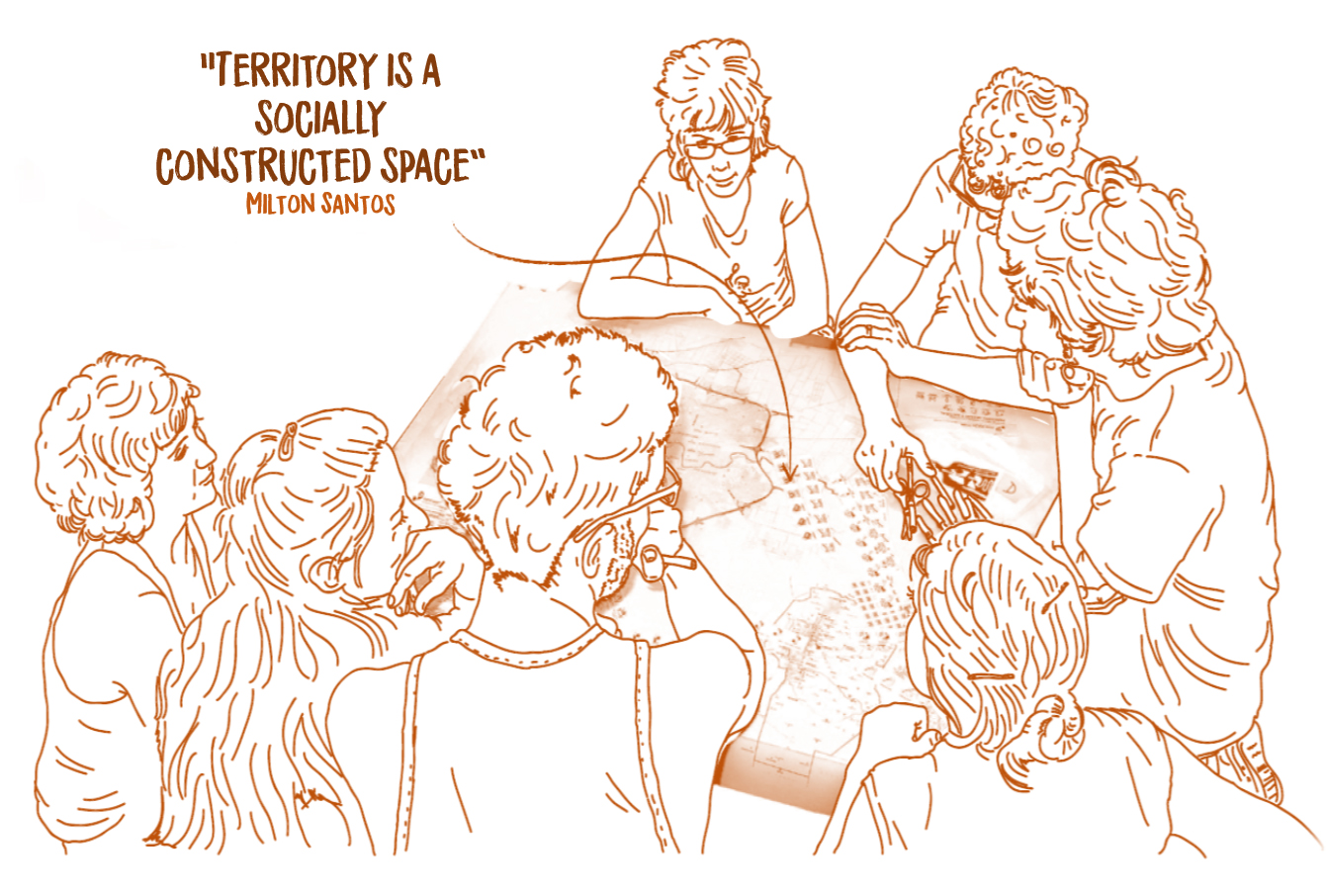 We began in 2006, although the strongest momentum came in 2008 with the collective mapping workshops. We came from backgrounds linked to graphic art, critical communication and social movements, and felt the urgency to move beyond the art niche to intervene in concrete reality. We wanted to create tools that went beyond symbolic denunciation, enabling collective processes of reflection, action and territorial resistance. The Latin American political, social and environmental context both inspired and challenged us.
It was not about “differentiating from” but about “inventing from”. We could not find a space where our searches converged: combining popular graphics with pedagogical tools, situated research with visual imagination, activism with environmental awareness. A device was needed that could mutate, adapt and activate processes from below.
ABOUT MAPPING COLLECTIVELY
Since 2008 we have been developing and promoting collective mapping as a political, aesthetic, pedagogical and environmental practice. It is not just social cartography; it is a tool of appropriation and transformation, built in dialogue with communities, movements and organised collectives.
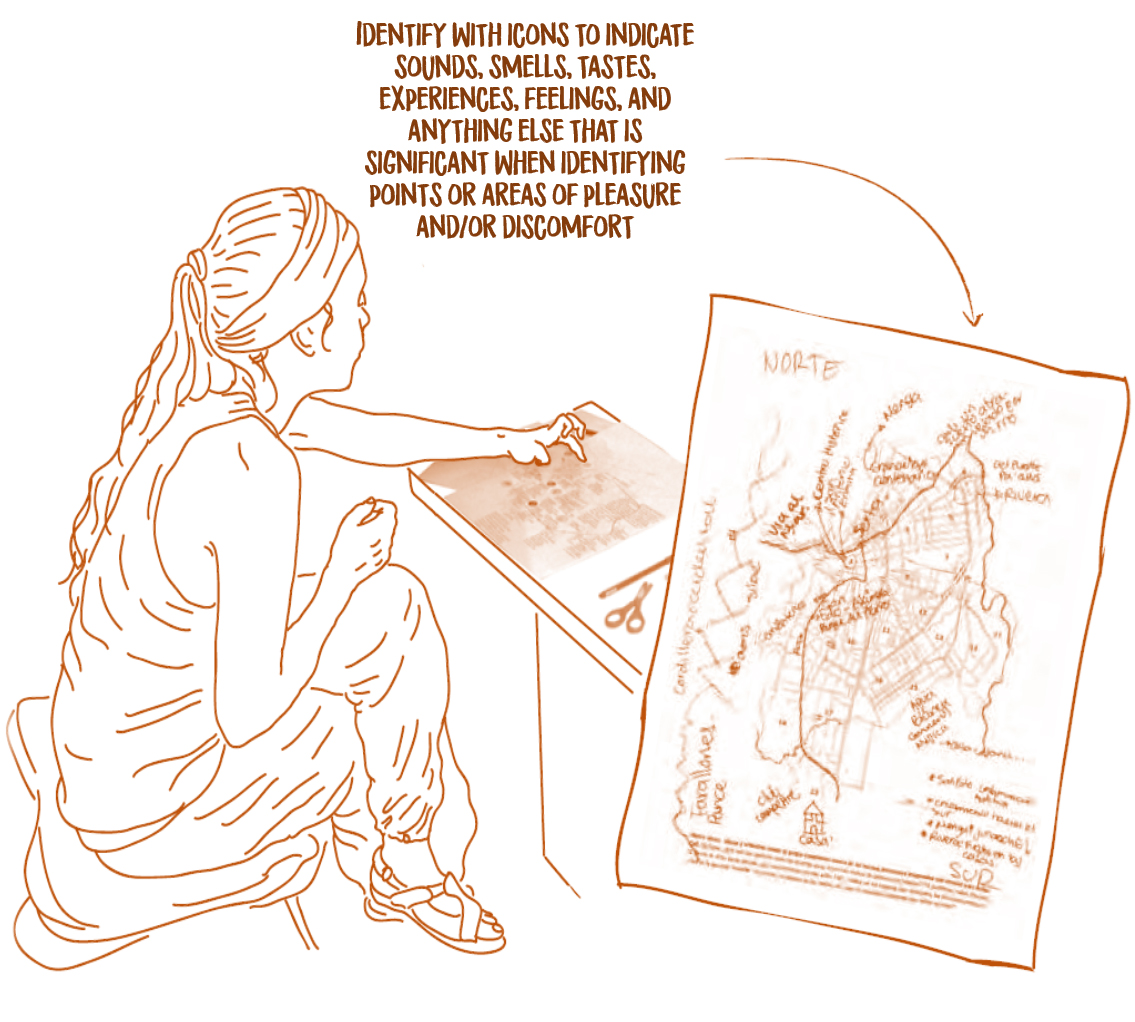 This approach centres on the proximity of bodies, the performative dimension akin to art, the multiplicity of voices and design as a popular language. Collective mapping is an open methodology, sensitive to context, based on the exchange of knowledge, where memory is activated, conflicts are made visible and possible futures are projected.
The maps from the workshops are not intended to illustrate academic papers or fulfil institutional diagnoses. We reject that epistemological extractivism that takes the voice of the territory only to feed distant theoretical frameworks. The collective maps we facilitate are living tools, used, shared and transformed within the communities that generate them. They strengthen organisational autonomy, stimulate local action, allow communities to generate their own narratives and dispute hegemonic accounts, while also incorporating environmental care and ecological justice.
MAPS AS COMPLEX TOOLS
For us, maps are powerful and complex tools of communication. They do not operate as linear texts or closed discourses. A collective map condenses multiple layers of information: data, memories, conflicts, affections, tensions, desires and environmental concerns. And it does so simultaneously, without hierarchies, enabling multiple possible readings.
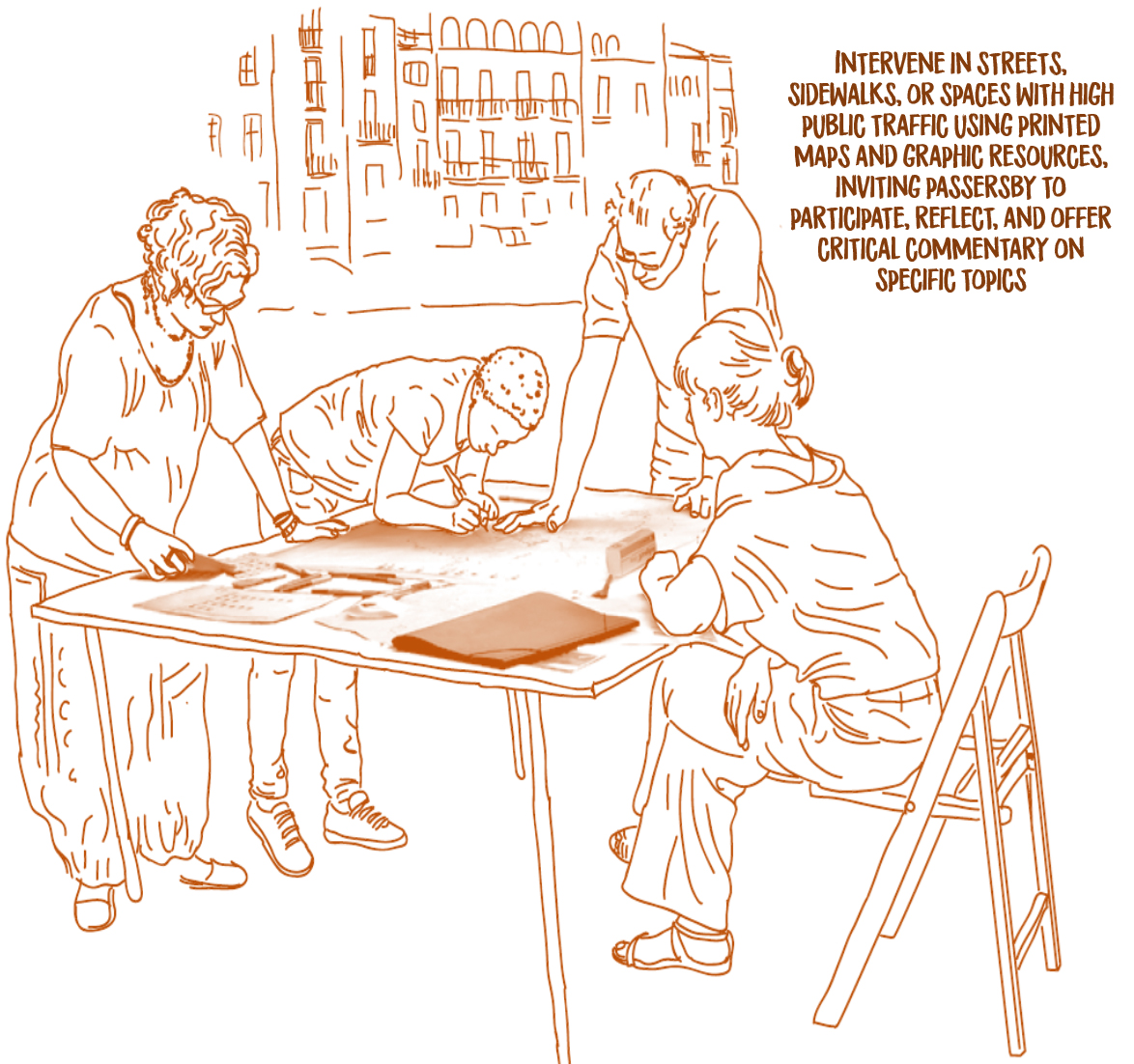 We live surrounded by maps: educational, touristic, urban and digital. This familiarity grants them unique power: they do not intimidate but rather invite us to enter, explore and intervene. The collective map does not seek to faithfully represent a territory but to provoke a critical reading of it, to generate conversation, politicise the everyday and recover what is usually absent from official narratives.
There exists an almost intuitive capacity to read maps: to step back, locate conflicts, visualise relationships, project transformations and connect them with environmental sustainability. We see the map as a medium: a platform for coming together, thinking collectively and acting in common.
TOOLS, SUPPORTS AND METHODOLOGIES
The heart of our work lies in the collective mapping workshops, where we use maps, pictograms and graphic devices as excuses to spark conversation, memory, critique, political and environmental imagination. We share some materials that may be useful for the EvalParticipativa community.
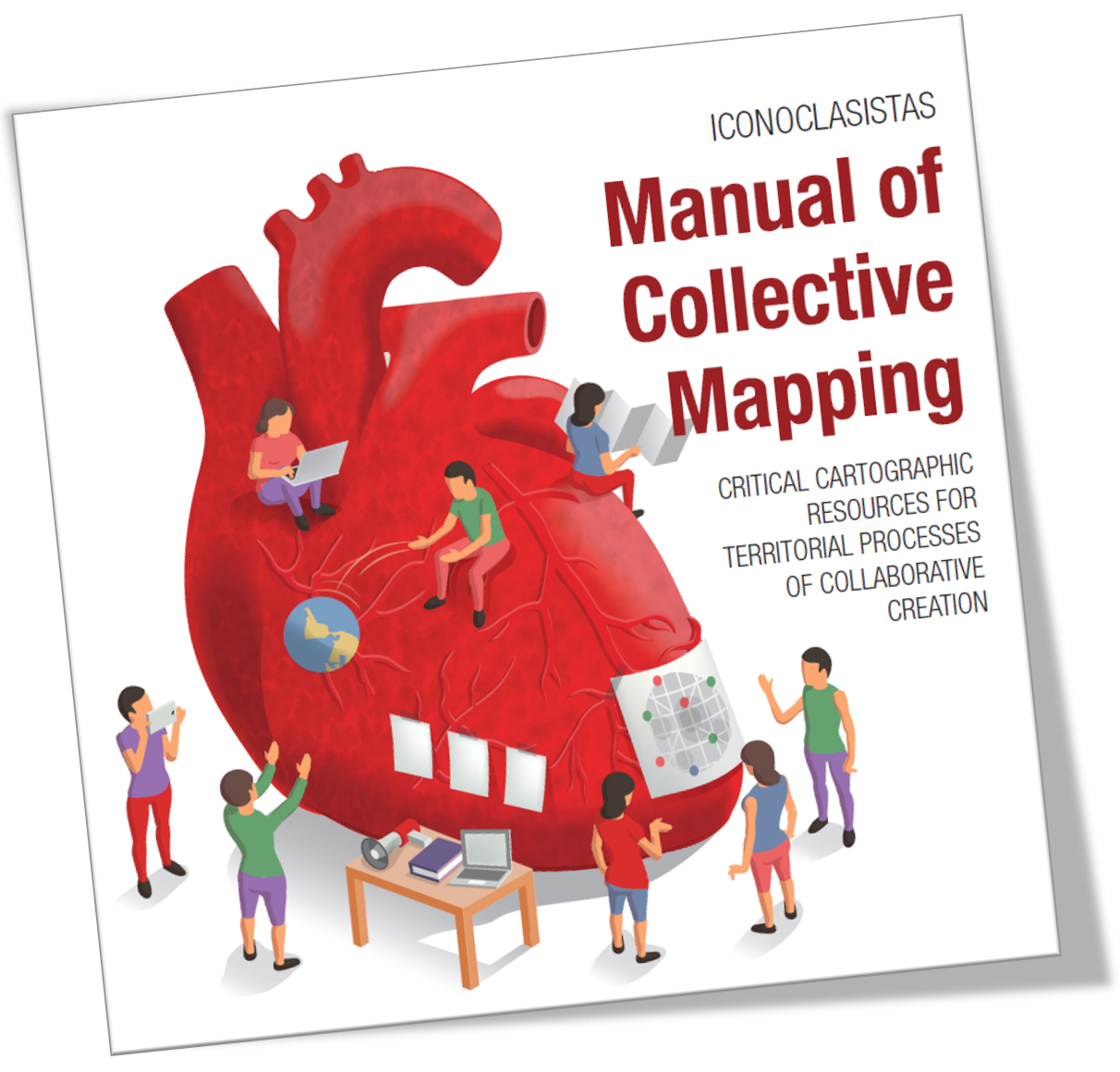 The Collective Mapping Manual, a guide that condenses our working methodology. This manual is based on our experience to show how, through mapping workshops, it is possible to enhance different ways of understanding and signalling space through the use of diverse types of language such as symbols, graphics and icons, which encourage the creation of collages, phrases, drawings and slogans.
In addition, in the section on supports and resources (only Spanish) you will find “sentipensar machines”, analograms and situational diagrams. You can also access a graphic arsenal of downloadable and adaptable icons for all types of communities.
The aim is for graphic support to function as a mediator between knowledge, languages, experiences and environmental issues, rather than as mere decorative illustration. We hope these contributions will serve those who facilitate evaluation processes with social participation.