by Ana Rojas Viñales
 The aim of this article is to highlight the need to institutionalise the valuable, yet still incipient, efforts being made in Paraguay to establish a culture of evaluation.
Why does Paraguay need a National Evaluation System (SNEP)?
Over the past 20 years, Paraguay has been working towards developing a system for the evaluation of public policies, with significant support from multilateral banks and bilateral cooperation. One of the most important advances has been the identification and measurement of the supply and demand for evaluation, together with a diagnosis of institutional and professional capacities to evaluate policies, programmes and projects.
If we consider the IDB’s Monitoring and Evaluation indicators (2015), Paraguay has only 0.7 points out of a possible 5, which highlights the need to strengthen the country’s evaluation capacities and supply. The National Evaluation Capacity Index (INCE) can be used as a snapshot of the situation in Paraguay in terms of evaluation in five dimensions (institutional structure, supply, quality, multi-agent spaces and use), showing the challenges and opportunities for the SNEP.
This information serves as a knowledge base for the study of clear protocols to establish coherent and coordinated guidelines to govern and standardise the evaluation processes of public policies and programmes in Paraguay. The results and information generated in these evaluations will make it possible to report on the performance and management of public bodies and assess whether the objectives and goals have been met.
The roadmap for the country’s public policies is determined by Paraguay’s 2030 Development Plan and the Sustainable Development Goals (SDGs), with the intention of aligning actions across the executive branch’s sectoral bodies to make Paraguay one of the most competitive and efficient countries in the world (…) (SNEP, 2030) and ensuring global challenges are addressed, sustainable development promoted and the quality of life improved worldwide. The SDGs focus on areas that include poverty eradication, gender equality, health, education, climate action, and peace and justice.
How to build the SNEP
The National Evaluation System will only be considered legitimate if representatives of different stakeholders are involved, including civil society and economic interest groups. Because of the verifiable evidence these groups require if they are to invest or participate in growth and development, they are increasingly demanding that public policy should be evaluated to ensure that the allocation of resources is as efficient as it can be, the greatest possible number of people are reached and the effectiveness of public actions measured.
 The democratic and transparent participation of institutional authorities in the construction of the SNEP is indispensable, as is the technical assistance of independent experts in evaluation, auditing and monitoring drawn from the private sector and civil society. INCE represents a fantastic opportunity to make public policies transparent and demonstrate that they can transform and improve people’s lives. This will make it easier to establish the SNEP as the national benchmark for monitoring and evaluating public policies in Paraguay, in alignment with the SDGs and the 2030 SNEP.
Although the state coordinates the SNEP, its actions involve multiple actors with whom it plans and agrees the principles and standards for monitoring and evaluation, taking into account the objectives, resources and target population of the public policy in question. The SNEP also monitors and evaluates the management actions of state agencies and bodies and the implementation of resources. In addition, it identifies difficulties and capitalises on experiences, proposes revisions and adjustments, strengthens the knowledge of technical teams and certifies competencies.
The first step in building the SNEP is a diagnostic process involving a comprehensive analysis and assessment of current government policies. This process consists in collecting data, evaluating impact and efficiency, taking the context into consideration, involving a range of actors and generating recommendations to improve policies. It seeks to ensure that public policies meet the needs of society and achieve the desired outcomes, thus promoting more informed and transparent decision making. In this respect, the INCE is a collaborative instrument which contains up-to-date information and describes the situation of evaluation in Paraguay in 2023.
A work plan should then be designed on the basis of this diagnosis, including objectives, scope, methodology, timelines, resources, responsibilities, budget, evaluation, risks and contingencies, within the context of state management and the participation of other actors. In terms of participation and synergy, the main actors should combine their capacities and pool their knowledge, technical and financial capabilities and infrastructure to ensure that the implementation and consolidation are well accepted in political spheres and considered legitimate.
The SNEP is still in its infancy, and not many institutions are currently implementing evaluations in an orderly manner according to institutionalised protocols. The most valuable and systematised experience corresponds to the PpR (Presupuesto por Resultados), a budget management strategy that seeks to connect results to financing and management decisions concerning the provision of goods and services (MEF, n.d.). This methodology, which focuses on improving the efficiency and effectiveness of public spending, uses performance information generated for budgetary decision making (MEF, n.d.).
How to ensure inter-institutional participation in the building of the SNEP?
In recognition of the need for a coordinated, orderly, body dedicated to evaluation in Paraguay, the state -as the responsible party and promoter of public policy evaluation in this case- must issue an open invitation to all sectors to participate in the process.
This invitation to participate should first identify who is requesting the evaluation and what they need it for. The latter is more than clear: to make public policies more efficient and successful. The parties requesting the evaluation are institutions, civil society and international cooperation organisations, but also, and very importantly, individuals, as subjects of law and of state action.
Secondly, a mapping exercise should be carried out to identify the actors involved in public evaluation, and identify their roles and responsibilities. The process should also involve a ranking of stakeholders according to their levels of authority and commitment to developing an evaluation culture as a cross-cutting aspect of all aspects of public management.
Thirdly, the invitation to build the SNEP should focus on the participation of the users of the evaluation results in the development of public policy decisions, which should be based on empirical, reliable and robust evidence that facilitates public management decisions to be adjusted by the state, international cooperation organisations and NGOs.
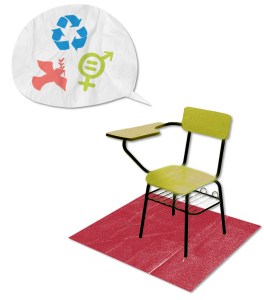 In order to guarantee inter-institutional coordination and participation, it is necessary to ensure commitment and establish monitoring mechanisms so that each party fulfils its responsibilities and carries out its functions, and so that governing bodies are up to date with innovative evaluation practices and international standards, technologies and the most efficient methodologies for public policy improvement.
One of the main challenges involved in building the SNEP involves gaining the attention and engagement of all the different actors involved in evaluation culture, whether they be involved in defining the work plan for the establishment and institutionalisation of evaluation in a cross-cutting manner across all public entities, or in the design and adjustment of state strategies.
Therefore, we must be careful to ensure the participation of all strategic allies (managers, users and decision makers) when building the SNEP in Paraguay, on the basis of the information, data and evidence generated by the process.
Another important objective should be to assess and systematise evaluation practices in order to capitalise on the experiences and knowledge gained as a tool to optimise public resources and efforts, improve public spending and increase efficiency in the Paraguayan state.
References
Guggiari, G.; E. Rotondo; M. Flecha; C. Romero; N. Ruiz Díaz; A. Sauer; J. Abbate (2012). Informe de Autoevaluación 2010 – 20211. Presentación de síntesis a la Agencia de los Estados Unidos para el desarrollo internacional. USAID.
Kaufmann, J. ; M. Sanginés y M. García Moreno (ed) (2015) Construyendo gobiernos efectivos. Logros y retos de la gestión pública para resultados en América Latina y el Caribe. Banco Interamericano de Desarrollo. Washington.
MEF (sf) ‘¿Qué es el Presupuesto por Resultados (PpR)?‘, Mapa de Inversiones + Paraguay en Resultados.
MEF (sf) ‘Ministerio de Economía y Finanzas’. Ministerio de Economía y Finanzas