by Mary Wickenden
Introduction
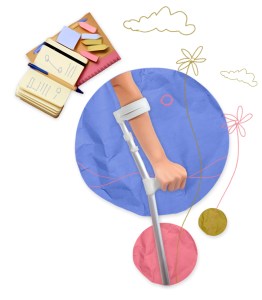 In the past, people with disabilities have been left out of many aspects of life including research and evaluation. They have not usually been included in ‘mainstream’ studies about key topics such as health, education, WASH, gender empowerment, social and political participation, while other groups in populations are more routinely asked for their views and their qualitative data is collected.
It is often perceived to be too difficult or expensive to include disabled people. This is discriminatory and leads to continued lack of understanding about their lives. We need to collect, both in research and evaluation, disability-inclusive data to understand disabled people’s perspectives, situations and needs, alongside others’ views.
Additionally, disability-specific research has been rare and poorly funded. Now, partly in response to the game-changing UN Convention on the Rights of Persons with Disability (UNCRPD, 2007), the rights of disabled people to participate in all aspects of life are recognised, and research and evaluation priorities are changing to include disability data and disabled people’s perspectives on many topics.
 Globally there are approximately 1 billion + people with disabilities, equivalent to 15+% of any population (about 1 in 7 people). Rates increase with age, around 10% of children have disabilities, whereas in elderly populations the figure rises to 40% or more (WHO and World Bank, 2011).
Ideally, you should aim for these percentages to be represented in your research and evaluation populations, as well as aiming for gender equality, as women and girls with disabilities are more excluded than boys and men.
Also remember that people with impairments have other identities apart from perhaps identifying as disabled. They may see their other identities, such as being a teenager, a parent, being a head of a household, being gay, or being a community leader as more important than being seen as disabled. Considering disability is an important part of an intersectional approach.
How to be disability inclusive?
In the following paragraphs I will share some general tips for evaluation & research
- First and most importantly, ask people what they need in advance and during events– don’t guess or assume what is needed. People can usually tell you very clearly. Don’t help people without checking with them what is needed.
- Don’t be afraid to include and invite people to join your research or evaluation event or research. Remember people with disabilities are more like everyone else than they are different. Be open and accepting of people’s differences. Value their contribution and participation.
- Include a line in your budget to cover the cost of ‘reasonable accommodation’ – this could cover the cost of :sign language interpreters, an assistant attending with someone, or to produce accessible materials such as braille or digitally formats.
- Think about different types of barriers which could prevent participation, these might be physical, communicative, attitudinal or structural. Some barriers are almost invisible and difficult to spot!
- When planning participatory activities, think carefully about how everyone will be able to join in. You may need to make different adjustments for different people during different activities.
- Make sure your ethics statements include consideration of the potential extra risks to people with disabilities and say how these will be mitigated. For example, be careful about anonymity as some people may be easily identified by their impairment and or other characteristics. Make sure people give clear informed consent.
- Most participatory and action orientated evaluation activities and methods can be adapted for people with specific access needs. For example people with visual impairment can join in with visual activities such as drawing (eg river of life) or photovoice, deaf people can enjoy storytelling, music and dance, people with physical impairments can do sports etc. Don’t assume something can’t be done, check with the person and adapt activities to suit them.
- Make sure that people can position themselves in the room in order to see or hear well and to enter or leave easily.
research and evaluation process
Below, I suggest a series of practical steps for the different phases of the research and/or evaluation process.
a. Planning
– Ask people what support needs they have, in advance if possible.
– Include reasonable accommodation in the budget so that you can meet people’s needs.
– Proactively invite people – contact different local Organisations of People with disability (OPDs) to widen your recruitment.
– Provide disability awareness training and brief the whole team before you start.
– Check if people need braille or electronic documents in advance.
b. During the process
It is important to bear in mind these specific tips for people with disabilities.
 – To make an environment physically accessible, it should be step free, easy to access (ramps, handles, handrails and lifts if necessary) and wheelchair accessible. Leave plenty of space. Make sure toilets are accessible, near your main meeting room, with wide doors, turning space, handrails and low basins.
– Provide orientation to the space for visually impaired people. Ask how they like to be guided as this varies. Tell them who is in the room. Don’t all leave the room (for example for refreshments) without telling them where everyone is going! Remind everyone to verbally describe any visual images on slides or flipcharts. Provide large size font on signage and tactile signage if possible. If you have found out in the planning stages that people need braille or electronic documents, make sure they are available.
– When talking to a deaf person make sure you are facing them, talk normally, don’t shout or slow down your speech, this doesn’t help. Provide Sign Language Interpretation and visual information. Provide a hearing aid loop system if possible.
– Use simple visual materials and clear spoken presentations so that people with cognitive/learning impairments can follow the content. Allow for extra time for activities and repetition of information. Produce ‘easyread’ (simple vocabulary and grammar) versions of key documents.
– Provide a calm quiet room nearby where people can take time out if the situation is too noisy and overwhelming.
– Allow flexible breaks and rests so that those with health conditions such as pain or who tire easily can rest and move about.
c. Following up
– When planning dissemination outputs, plan for easy-read written versions and in-person events in addition to long technical reports.
– Audio and video reports with transcription on the screen are useful.
– Ask people for their reflections using multimodal and visual methods such as emoticon rating scales and story methods.
You can read here the complete guide “Disability inclusive research: What is it and how can we do it?”, with related resources, credits and other information.