INTERNATIONAL TRAINING MOBILITY EXPERIENCE IN COSTA RICA
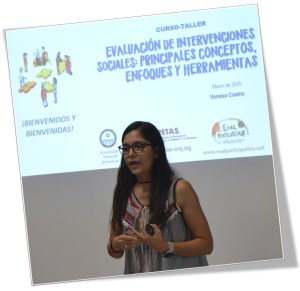 Dr Vanesa Castro, professor and researcher from PETAS, the Research Program on Employment, Environment and Society at the National University of San Juan, Argentina (UNSJ), participated in an intense and enriching experience in Costa Rica within the framework of the International Mobility Program promoted by the Secretariat of Postgraduate Studies and International Relations (SEPRI) of the UNSJ.
For two weeks, between March 10 and 20, Vanesa carried out a process of academic exchange and knowledge sharing, working with leading actors of Costa Rican State and academic institutions. The main objective of this program, supported by SEPRI, is to strengthen the global involvement of UNSJ through the exchange of experiences, inter-institutional collaboration and the development of joint research projects, generating cooperation networks and promoting the transfer of knowledge that contributes to the improvement of public policies and the formation of an academic community committed to regional development.
MOBILITY PROGRAM
The working agenda is part of the Technological and Social Development Project 2023-2025, developed by PETAS, which is aimed at strengthening the exchange and interaction with institutions in the region interested in deepening knowledge and strengthening experiences in collaborative and inclusive approaches to evaluation. The work plan was designed jointly with relevant Costa Rican institutions, including the Monitoring and Evaluation Unit of the Ministry of National Planning and Economic Policy (MIDEPLAN), the Latin American Department of Social Sciences of Costa Rica (FLACSO) and the Graduate Program in Evaluation of Development Programs and Projects of the University of Costa Rica (UCR). These entities collaborated closely to define an itinerary that combined workshops, seminars and trainings within the framework of the EvalParticipativa initiative implemented by PETAS in alliance with the German Institute for the Evaluation of Development Cooperation (DEval). This collaboration was key to align efforts and generate a space for exchange and mutual learning.
WORKSHOP ON THE DESIGN AND USE OF DATA COLLECTION INSTRUMENTS
 In this first activity, Vanesa facilitated a training session for the team in charge of the Evaluation of the Promotion of Organic Agriculture in Costa Rica, with the participation of representatives from MIDEPLAN, the Ministry of Agriculture and Livestock (MAG) and the Universidad Estatal a Distancia (UNED). The activity took place at the UNED and began with a development of a conceptual framework on the importance of designing data collection tools and the general criteria for selecting and using participatory tools.
Subsequently, the team worked with the Stakeholder Mapping previously built, identifying the information needs for each social actor in the evaluation. Based on this identification, some stakeholders were prioritized and working groups were organized to start designing specific instruments, considering the particularities of each selected stakeholder and the criteria shared in the workshop. To guide this process, Vanesa presented a scheme of collection tools classified according to modality and purpose, in addition to sharing participatory evaluation (PE) methodologies developed in the EvalParticipativa initiative’s Toolbox, with the aim of providing inputs to facilitate the development of instruments adapted to the team’s needs. The purpose of this activity was to contribute to the ongoing evaluation process, strengthening the design of tools to collect relevant and useful information for decision making.
RESEARCH SEMINAR ON PARTICIPATORY EVALUATION METHODOLOGIES
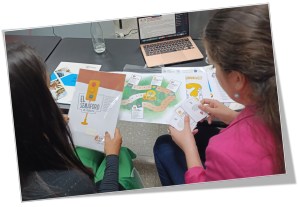 This seminar was developed online and onsite through the Postgraduate Program in Evaluation of Development Programs and Projects that has being implemented by the University of Costa Rica for more than twenty years. The activity brought together advanced students of the master’s program, graduate professionals and professors interested on adopting participatory approaches in their research or professional practices.
The purpose of the seminar was to provide a conceptual and methodological framework on PE, with a specific focus on its use in social research. During the session, the principles of PE, its methodological advantages and challenges, and its potential to generate critical and applicable knowledge in the evaluation of development programs and projects were explored. In addition, through the analysis of these principles, methodological guidelines and tools, participants identified ways to integrate PE into their own projects, considering key aspects such as research design, data collection, analysis and interpretation of results. The dynamics of the seminar promoted interdisciplinary dialogue and the exchange of experiences among those interested in the design, implementation and evaluation of public policies, social programs and development projects.
TRAINING COURSE ON PARTICIPATORY EVALUATION
 A third activity was the training on conceptual and instrumental approaches to evaluation with focus on social inclusion, held at the Ministry of National Planning and Economic Policy (MIDEPLAN) and jointly organized with the Evaluation and Monitoring Unit of MIDEPLAN, FLACSO and the Postgraduate Program in Evaluation of Development Programs and Projects of the University of Costa Rica (UCR-PEPPD).
The activity brought together representatives from various public and academic institutions in Costa Rica. The purpose of the workshop was to learn about and experiment with tools for the incorporation of PE in different areas of work of the Costa Rican government. The workshop explored the key principles of this approach, its advantages and challenges, as well as strategies for its application in different institutional contexts. Through group work dynamics and practical exercises, participants identified opportunities to integrate participatory evaluation into their evaluation processes, adapting it to the needs and context of each sector.
The diversity of the participants’ profiles enriched the debate and consolidated the co-construction of knowledge that characterized this workshop. Representatives of the following entities and organizations participated in this training session: MIDEPLAN-UEV (Evaluation and Monitoring Unit, Ministry of National Planning and Economic Policy), MAG-SEPSA (Executive Secretariat for Agricultural Sector Planning, Ministry of Agriculture and Livestock), DESAF-UEVAL (Evaluation Unit of the Office of Strategic Affairs of the Government of Costa Rica), MCJ (Ministry of Culture and Youth), MEIC (Ministry of Economy, Industry and Commerce), MINAE (Ministry of Environment and Energy), PANI (National Child Welfare Agency), FLACSO, UCR-PEPPD (Postgraduate Program in Evaluation of Development Programs and Projects of the University of Costa Rica), MCJ-SEPLA (Planning Secretariat of the Ministry of Culture and Youth).
TRAINING ON EVALUATION OF SOCIAL INTERVENTIONS: MAIN CONCEPTS, APPROACHES AND TOOLS
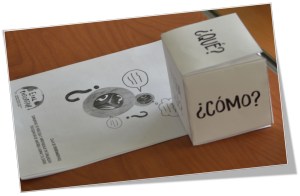 This last training, held at FLACSO Costa Rica’s headquarters, was organized jointly with the Institute for Municipal Development and Advisory Services (IFAM). The purpose of the training was to strengthen the planning and evaluation capacities of municipal officials.
The workshop was attended by professionals with diverse knowledge and experience in evaluation, who are responsible for implementing and monitoring public and social interventions at the local level. The workshop brought together professionals from different municipalities in Costa Rica, who play strategic roles in project management and public policy evaluation. Among the participants were institutional planners, public investment analysts, municipal strategy managers and support professionals in citizen participation. In addition to strengthening their institutional capacities, the conference provided a valuable horizontal exchange among participants, who shared experiences, challenges and lessons learned from their own contexts.
Throughout the day, the participants worked on the fundamental concepts of evaluation, its importance in public management and the different approaches and methodologies available. The proposal combined theoretical presentations with dynamic activities, allowing participants to understand how to apply practical tools in their respective municipalities. The day ended with a space for dialogue and exchange of ideas on how to integrate evaluation into municipal management effectively, and the challenges it represents, ensuring that the processes are useful for decision making and continuous improvement of local interventions.
FINAL REMARKS ON MOBILITY EXPERIENCE
The international mobility of professors and researchers represents multiple benefits for all the institutions involved. On the one hand, it allowed Costa Rican institutions to access methodologies and tools developed by EvalParticipativa, enriching their institutional capacities and fostering inclusive and collaborative approaches in their evaluation processes. On the other hand, for the UNSJ and particularly for the PETAS team, the experience represented an opportunity for field learning, validation of instruments and strengthening of academic and technical links with counterpart organizations in the region. In addition, a regional collaboration network was consolidated with potential for future joint interventions, development of methodological resources and new opportunities for shared training.
This experience reaffirms SEPRI UNSJ’s commitment to its objective of promoting significant academic internationalization processes, generating new institutional alliances and favouring the circulation of knowledge between territories. Establishing ties with institutions such as MIDEPLAN, UNED, UCR, FLACSO and IFAM not only represents a concrete achievement for the team that participated in the mobility, but also opens the way for future initiatives to strengthen research and training with regional projection. We invite you to see the photo gallery of these activities.