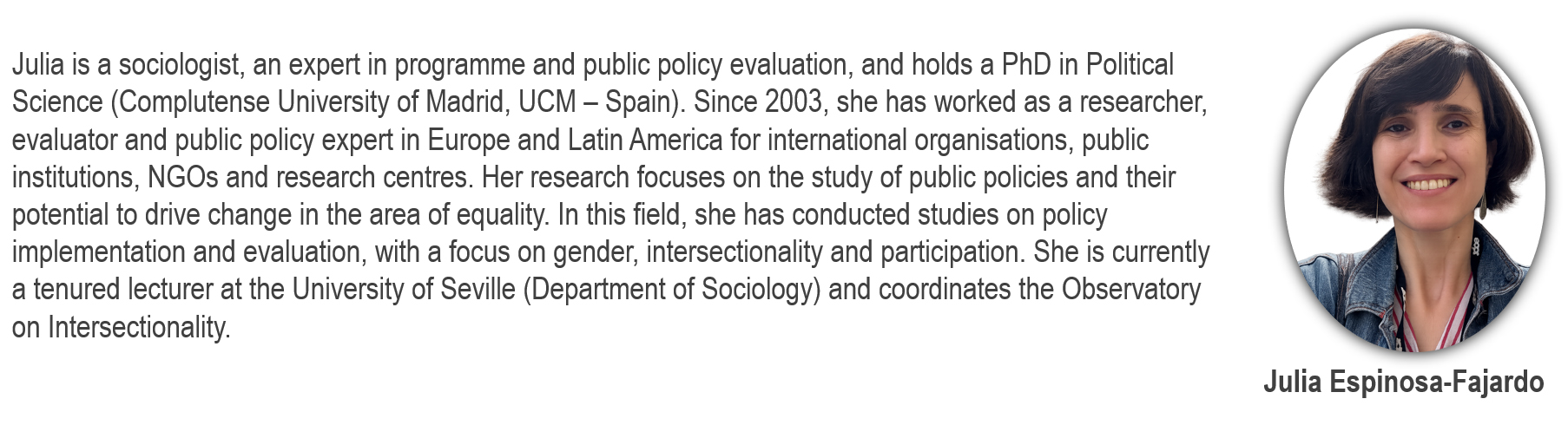
by Julia Espinosa-Fajardo
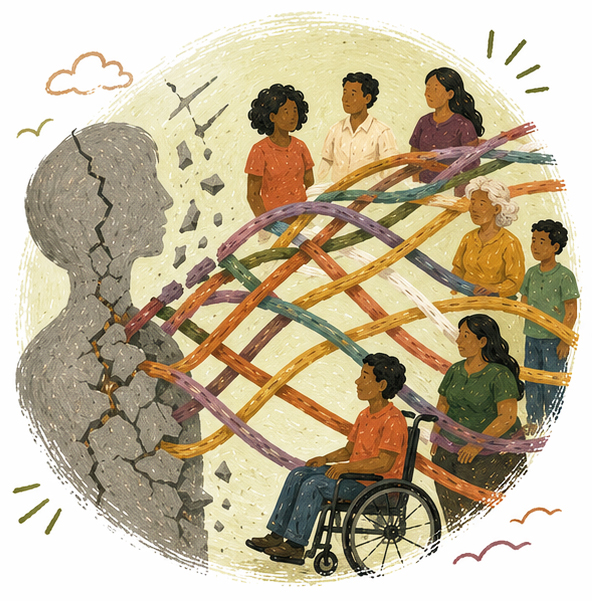 On the path towards consolidating evaluation, the 2030 Agenda has given us an imperative mandate: ‘leave no one behind’. However, when we look closely at public policies and programmes, we realise that not all social needs receive the same attention, that implementation does not reach everyone equally, and that their impacts are not always distributed equitably.
Indeed, if we fail to take account of the various intertwined inequalities at play in each context, policies and their evaluation tend to reproduce these inequalities and, at times, reinforce them. At this point, it is essential to incorporate intersectionality into evaluation. What does this approach bring to our field? This question is central for those of us who view evaluation as a key tool for equity and social justice.
Below, we share some reflections on this subject, which are explored in greater detail in the chapter ‘Gender and Intersectionality in Public Policy Evaluation: Theoretical Developments and Practical Implications’ (Espinosa Fajardo, 2025).
Intersectionality in evaluation: challenging the notion of the ‘universal subject’
Broadly speaking, intersectionality invites us to focus our attention on the interplay between multiple forms of discrimination (class, gender, ethnic origin, migration status, affective-sexual orientation, disability, etc.), recognising that this is not merely a sum of variables. On the contrary, the multiple axes of inequality and discrimination intersect in a simultaneous, non-linear and dynamic manner (Crenshaw, 1989). In this sense, adopting an intersectional approach involves challenging the idea of a universal subject and recognising that the intersection of these axes is complex, reflecting privileges and processes of marginalisation that manifest in specific ways within each context.
In the field of evaluation, intersectionality reminds us that public policies are rarely neutral: they are often designed and developed from privileged perspectives and positions (middle-class, middle-aged, cisgender, heterosexual, Western, etc.). It also highlights that these interventions are not experienced in the same way by everyone (Hankivsky and Jordan-Zachery, 2019). Consequently, incorporating the intersectional approach involves revealing how policies address and impact the intersection of oppressions and privileges in people’s real lives.
Evaluation as a political, democratic and social justice-oriented process
Furthermore, from the perspective of intersectionality – as from many other evaluative approaches – evaluation is not understood solely as a technical exercise in accountability, but as a deeply political, democratic and action-oriented process. Putting this into practice involves democratising relationships within the evaluation process, recognising the value of inclusion, participation and negotiation amongst different voices.
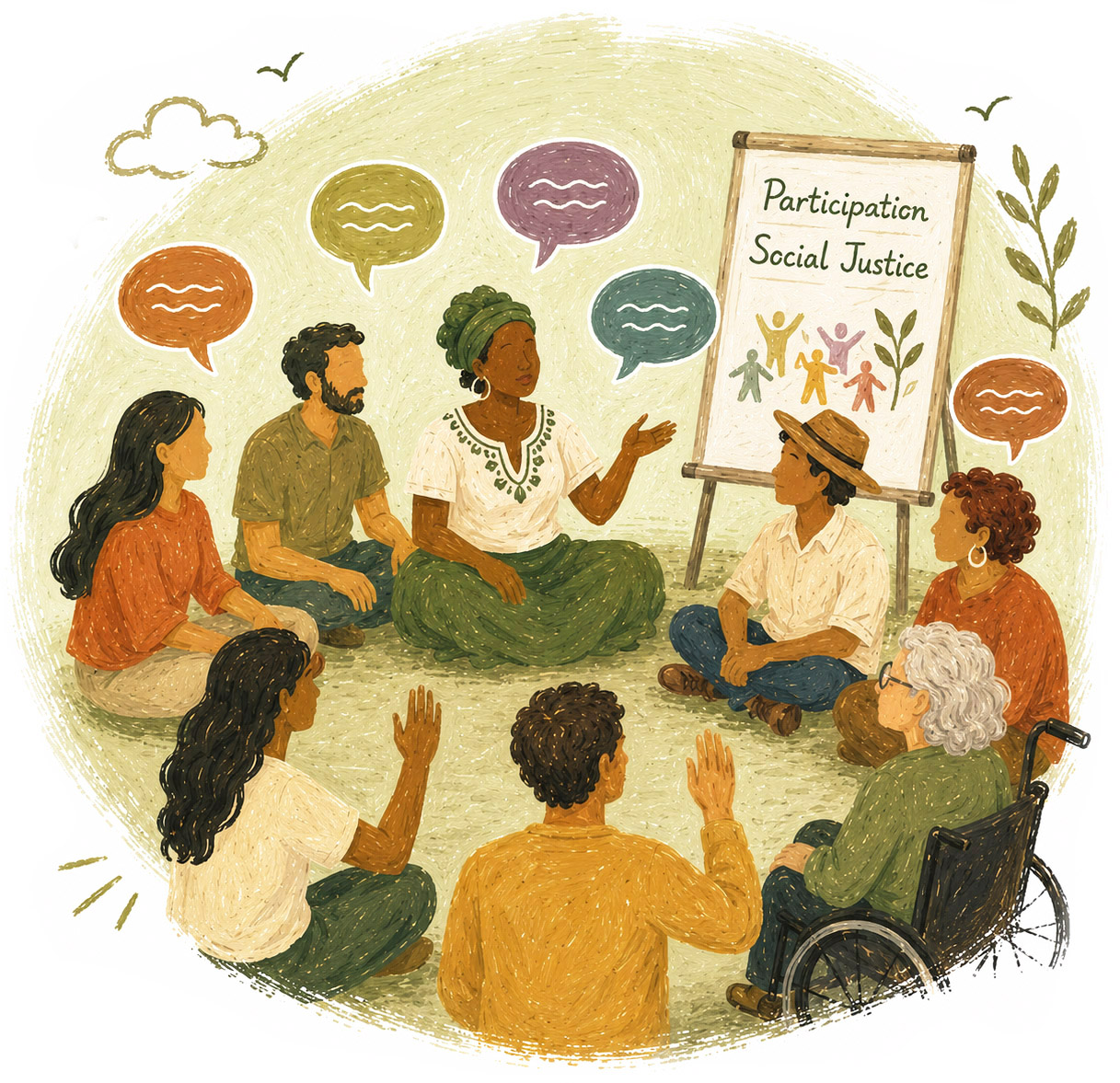
From this perspective, it becomes imperative to incorporate the experiences and lived realities of those populations that are under-represented and traditionally more marginalised. Furthermore, it is recognised that participation requires a clear awareness of the unequal power relations within each policy and social context — which shape the prioritisation of issues — as well as of the resistance that may arise from those actors opposed to structural change (Hankivsky and Jordan-Zachery, 2019; Hankivsky and Cormier, 2011).
The interplay between inequalities at the centre
At the same time, intersectionality in evaluation aims to generate knowledge that is useful for resolving problems linked to multiple forms of discrimination. To this end, a comprehensive understanding is required of how inequalities are formed and shaped through policies themselves (Hankivsky and Cormier, 2011).
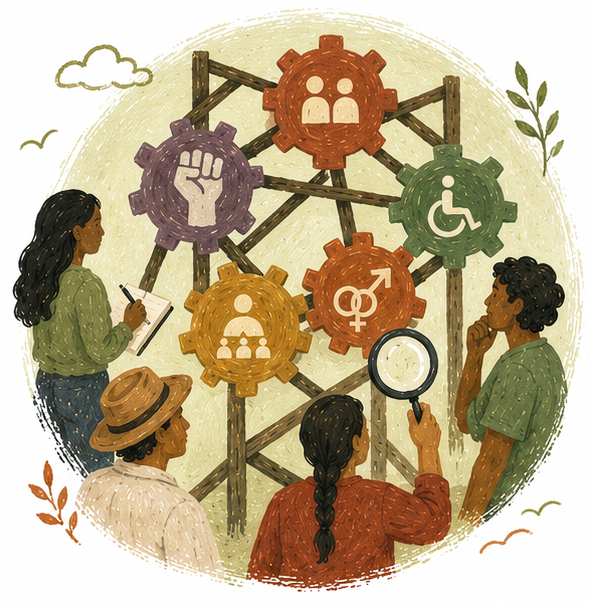 These inequalities reflect complex power relations and, far from being merely individual expressions, are structural in nature (Christoffersen and McCabe, 1 December 2024). Systems of power — characterised by processes such as racism, classism, heterosexism, ableism and ageism, amongst others — are intertwined and manifest themselves in different ways depending on the geographical, political or economic context. Analysis of this interaction between these systems must be present at all stages of the evaluation, from its scoping and commissioning through to the dissemination and use of the results.
Multiple models and methodological approaches
Furthermore, intersectionality implies understanding that there is no single possible model or methodological approach. Designs must take into account the critical issues of each context, scrutinising closely who benefits and who is excluded from the objectives, priorities and allocations of each policy (Hankivsky and Jordan-Zachery, 2019).
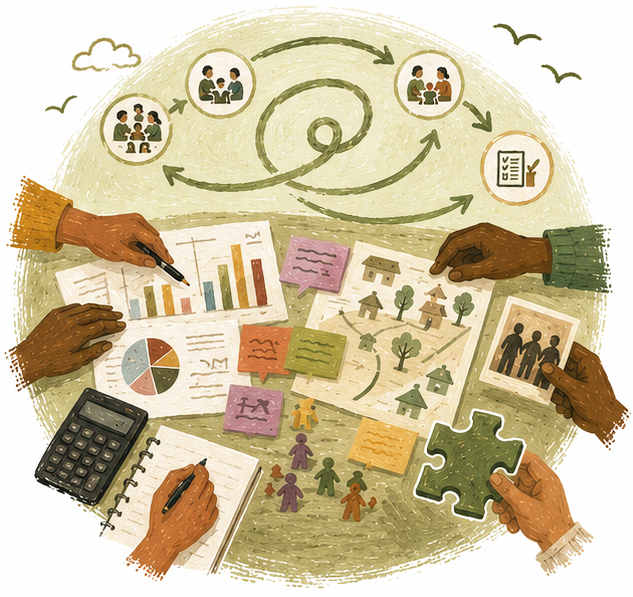 To achieve this, as already mentioned, it is essential to involve key stakeholders, giving marginalised groups an active voice in the evaluation process. Similarly, an openness to the invisible, the unexpected and the undefined is required, paying attention to potential resistance to social transformation (Bustelo, 1 December 2017). This helps to identify more precisely which forces oppose equity and how they operate (Hancock, 1 December 2007).
With regard to methodological approaches, there is a clear consensus on the relevance of mixed-methods approaches and the need to combine quantitative and qualitative techniques in accordance with the purpose of the evaluation (UN Women, 2020; UNEG, 2024). This methodological combination makes it possible to capture how inequalities are transformed in all their complexity. Similarly, the central importance of creating spaces for participation that foster joint reflection and challenge power dynamics throughout the entire evaluation cycle is reaffirmed.
These are some reflections on what intersectionality brings to evaluation. Putting it into practice requires, amongst other things, political will, institutional capacity, a critical stance on the part of evaluation teams, and progress on evaluation proposals that enable the intersectionality approach to be implemented more effectively. We hereby invite anyone who wishes to join us in addressing intersectionality in evaluation and in driving forward processes that contribute more effectively to equity and social justice.
Referencias
Bustelo, María (2017). Evaluation from a Gender+ Perspective as a Key Element for (Re)gendering the Policymaking Process. Journal of Women, Politics & Policy, 38 (1), 84-101.
Christoffersen, Ashlee y McCabe, Leah (2024). Operationalising Intersectionality in Equality and Domestic Abuse Policy in Scotland: Contradictions, contestations and erasure. Critical Social Policy, 0(0).
Crenshaw, Kimberle (1989). Demarginalizing the Intersection of Race and Sex: A Black Feminist Critique of Antidiscrimination Doctrine, Feminist Theory and Antiracist Politics. University of Chicago Legal Forum, 139-167.
Espinosa-Fajardo, Julia (2025). Género e interseccionalidad en la evaluación de políticas públicas. Desarrollos teóricos e implicaciones prácticas. En Daniel Catala-Pérez y Borja Colón de Carvajal Fibla (Coords.). Evaluación de políticas públicas en la era de las transformaciones: Hacia un nuevo paradigma en la toma de decisiones basada en evidencia (pp. 399-416). Editorial Aranzadi – La Ley.
Hankivsky, Olena y Cormier, Renee (2011). Intersectionality and Public Policy: Some Lessons from Existing Models. Political Research Quarterly, 64(1), 217-229.
Hancock, Ange-Marie (2007). When Multiplication Doesn’t Equal Quick Addition. Perspectives on Politics, 5, 63-79.
Hankivsky, Olena y Jordan-Zachery, Julia S. (eds.) (2019). The Palgrave Handbook of Intersectionality in Public Policy, Palgrave Macmillan.
ONU Mujeres (2020). Buenas prácticas en evaluaciones sensibles al género.
UNEG (2024) Integrating Human Rights and Gender Equality Perspectives in Evaluations in the UN System. Update of the 2014. UNEG.