by Guilherme Antonio Calabria Bayma Costa
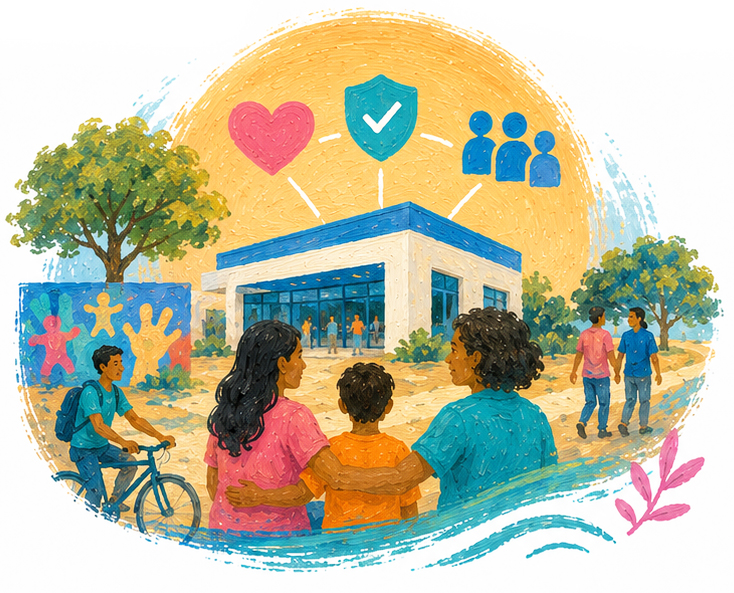 When I took on the coordination of the Public Policy Evaluation and Data Science Unit (NAPCD) at Recife City Hall in 2021, one of the biggest challenges was to thoroughly understand the impacts of the Compaz Network, a community center policy aimed at preventing violence and promoting social inclusion. In 2022, we had the opportunity to carry out an executive participatory evaluation with the support of Clear Lab, which allowed us to strengthen the culture of evidence-based decision making in municipal management.
From the outset, we understood that it was not enough to simply measure indicators: it was necessary to identify the mechanisms that explained how Compaz generated its results. To achieve this, we assembled a diverse evaluation committee, made up of center managers, representatives from the Secretariat of Citizen Security, academics, and social organizations. This plurality of perspectives was key to enriching the process.
 Together, we developed a Problem Tree, which made it possible to identify urban violence in Recife as a central problem and to map out its causes and consequences. Then we developed an Objectives Tree, reflecting the policy’s goals, and ultimately constructed the Theory of Change of the Compaz Network, which helped make explicit the logic connecting inputs, activities, outputs, outcomes, and intended impacts.
These tools served as the foundation for defining evaluation questions across five areas: the perceptions of Compaz employees, the perceptions of beneficiaries, impact on violence, impact on health, and impact on education. To answer these, we used mixed methods: surveys and focus groups with users, interviews with staff, and analysis of secondary data.
The findings were encouraging. In the communities served, people perceive Compaz as a safe and transformational space that expands opportunities and strengthens social cohesion. Objective data showed significant reductions in violent crime rates in areas near certain centers, providing us with evidence of real impact on local dynamics. Furthermore, the community listening process during implementation was seen as a decisive factor for local support.
 Some notable results from user surveys also confirmed the policy’s relevance:
-
-
- 91.6% expressed satisfaction with the activities offered;
- 88.6% said Compaz brought positive changes to their lives;
- 96.2% recommended building new centers in Recife.
-
What I value most from this experience is realizing how participatory evaluation enriches public management. The collective construction of diagnoses and recommendations not only produced more comprehensive evidence but also strengthened all stakeholders’ commitment to the continuous improvement of the policy. Today, I can assert that the Compaz Network is not only a violence prevention strategy—it is an example of how municipal management can transform territories through listening, evidence, and participation.
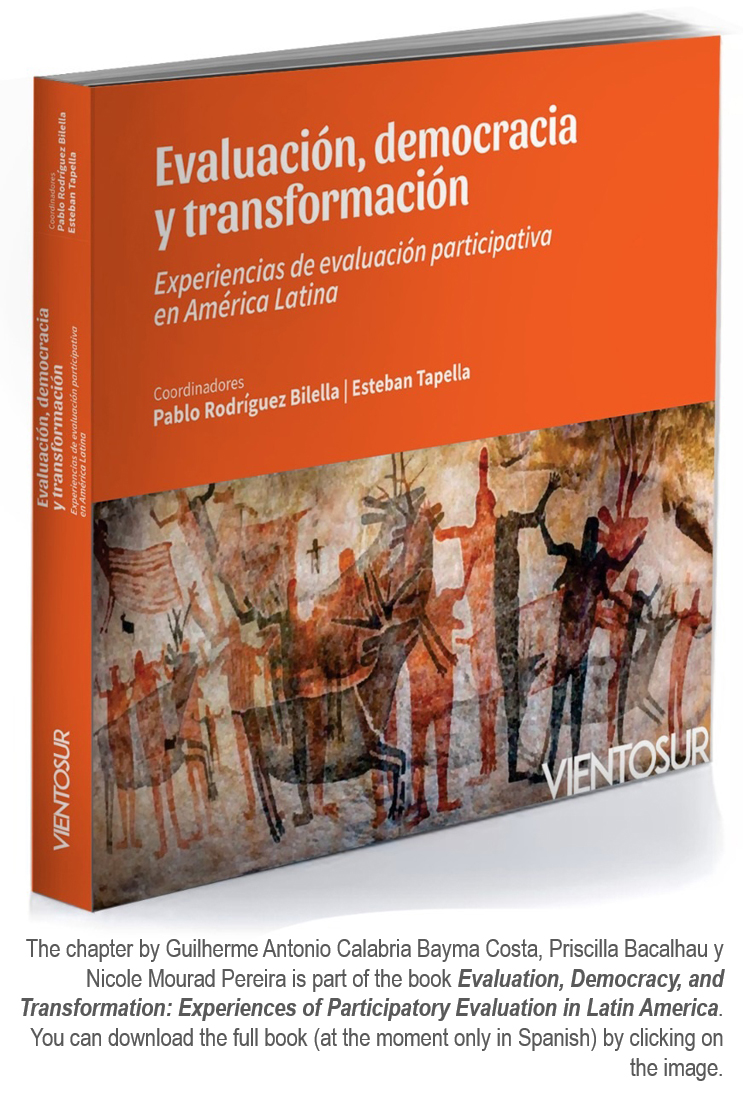 The process and its findings are described in detail in Chapter 5 — “Participatory evaluation of a community center policy: The Compaz Network experience (Recife, Brazil),” in the book “Evaluation, Democracy, and Transformation: participatory evaluation experiences in Latin America.” The chapter was written by me—as coordinator of the Evaluation Committee—together with Priscilla Bacalhau and Nicole Mourad Pereira from the Clear Lab technical team, who were responsible for methodological support. Gabriela Lacerda, Clear Lab’s executive manager, also participated as co-author, contributing her experience in strengthening monitoring and evaluation systems in Brazil.