NEITHER RECIPES NOR RECIPE BOOKS

One of the themes which will intersect the First Gathering of Participatory Evaluation Experiences for the region of Latin America and the Caribbean is that of how to conduct PE. Is there only one way? What factors do you have to take into account? What to do when confronted with unexpected situations?
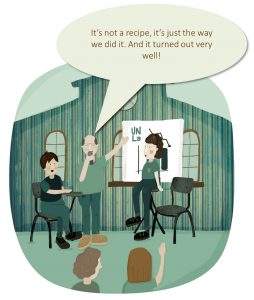
The truth is that there are no magic recipes which can be used to come up with universal solutions for every unexpected moment when conducting PE. Nor will we present an exhaustive guide on how to conduct PE in specific circumstances. Rather, what we aim to do is to collectively construct a basic method which can be altered to suit the characteristics of each situation, context and particular case.

In doing so, through reflective practice, we will observe and analyse each step, the roles of each stakeholder and each stage. We will obviously also emphasise the potential difficulties and limitations. As they say: a smooth sea never made a skilled sailor.

Quito, we are on our way!

PARTICIPATORY EVALUATION HAS THAT ‘JE NE SAIS QUOI’

They say “each follows their own rulebook” but what would happen if we converted these different viewpoints and approaches into a common shared perspective? At this First Gathering of Participatory Evaluation Experiences for the region of Latin America and the Caribbean  we will attempt to do just that.

But we must insist: By saying that, we are not suggesting that we intend to develop a general definition and by doing so, simplify it. Let’s be honest: No, just the opposite! In line with the horizontal action proposed by PE, we aim to propose a space where everyone can share their distinct perceptions, concepts, ideas and appreciations of PE.

In this way, we will be able to shine a light on those defining features which are repeated in the region. We will almost certainly dare to call some of these PE principles in our quest to be disruptive, but we will also be happy to observe any unique characteristics which make an evaluation truly participatory.

All participants will use their own experiences to discover how their realities take on different lights when viewed through the eyes of PE.

Bye for now!

THE SHOES OF PARTICIPATORY EVALUATION, THE FEET OF THE EVALUATOR

Can one experience represent all experiences? Who walks the path? Does PE establish the path or does the evaluator open the way? Over the next few days, we will try to answer these and other questions.

The leading role for this gathering is given to the experiences themselves. Over 5 days, using 15 experiences with evaluator peers, we will be able to zoom in on PE through their eyes despite the fact that they have been carried out in various regions.

Aside from the quantity and diversity of experiences, their value lies in the fact that they were and are transformative in their communities. In such tumultuous times as those today in our region, this is no mean feat. Through the stories, we will be able to observe the tools used, feel the challenges experienced and understand through their experiences that one PE is not the same as all PE.

Continue reading

THE COUNTDOWN IS ON ‘TIL WE MEET

In just five days, we will host the First Gathering of Participatory Evaluation Experiences for the region of Latin America and the Caribbean, and we want to invite you to enjoy the run-up with us.

Over the next few days, we will share everything that we are excited about regarding this gathering. That way, you will participate with us, from our perspective, through our eyes. And by doing so, you will become another one of the participants in this experience.

As you already know, the First Gathering of Participatory Evaluation Experiences for the region of Latin America and the Caribbean will take place in Quito, Ecuador from the 18 to the 22 of November.

Close your eyes (metaphorically! we want you to keep reading this post!) and imagine that you have the ability to teleport yourself. Not just to Quito, but imagine that you had the ability to go, in the blink of an eye, to various places in Latin America and experience different experiences in distinct communities, observe and debate about the roles involved in these situations, get fully informed… and all this through the Participatory Evaluation lens.

Continue reading