by Andrés Peregalli
Tell me how you evaluate and I will tell you what kind of education you promote
 The complex world that we inhabit values measurements and their virtues, often to an excessive degree. We thus live with the constant pressure to capture and make sense of learning that is taking place among individuals, groups and institutions.
Within such a context, the evidence that results from an evaluation instrument will be used as a proxy. In the best-case scenario, it is a solid and robust proxy. I once heard it said that evaluation in a university setting involves one person who is terrified (the student) and another who is bored (the lecturer). While all images are unfair to a point, this characterisation (still very common) is useful for identifying concepts/representations that allude to ways of understanding education, learning, teaching, evaluation and participation, and the effects they have on those who experience them. To put it another way: tell me how (what, why, when, who, where…) you evaluate and I will tell you what kind of education you promote.
This post describes a participatory evaluation experience in an undergraduate university setting. More specifically, it describes a Theoretical-Practical Seminar (TPS) within the department of Philosophy and Theology at the Catholic University of Argentina (UCA) that has been running for 10 years and is based on the Service-Learning (SL) pedagogy. The experience exemplifies a more profound epistemological and evaluative approach and another way of understanding teaching and learning. These political-pedagogical and didactic foundations are consistent with the educational model we are striving to pursue: a process of humanisation centred around the people who teach and learn. In this approach, there is no room for terror or boredom. Rather, the focus is on agency so that learning can flourish, be enjoyed and celebrated.
Continue reading →
 Nowadays Most Significant Change (MSC) is used so loosely that it’s worth reflecting on the method’s original purpose. Rick Davies, who designed the method has an online list of MSC publications which comprises over 200 documents. Yet, I suspect, there is a widely varying quality of application.
 We continue to share the knowledge and feelings of colleagues and friends who are leaders in participatory evaluation in Latin America and other regions as well. In these podcasts we want to give a close and human perspective, where evaluative practice is closely linked to the personal experiences, stories and territorialities of the interviewees.
 Dear colleagues, we would like to share with you a new contribution to the EvalParticipativa Toolkit. It is a very unique tool, which appeals to the free expression and creativity of children and adolescents. We invite you to read the note and watch the video where Emma Rotondo presents the process of applying the technique of drawing and diagrams as an instrument capable of capturing multiple perspectives.
 Participatory Evaluation (PE) has become established as a way of addressing challenges in the fields of education and community development in Latin America and the Caribbean. Our region is well known for its cultural diversity, wealth of traditions, and the challenges to community development posed by its high rates of poverty. In this context, PE is a beacon of hope that illuminates a more inclusive and participatory path.
 Today we welcome you to this new channel of exchange and articulation with our community of practice and learning (Spanish).
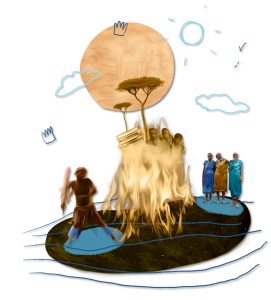 “Once upon a time on the planet Earth, science gathered loads of data from hard work by assiduous scientists. Unfortunately, this data was hidden behind barriers of complex scientific terms, financial paywalls, and languages that were not comprehensible to everyone. This River of Science flowed downhill but was not accessible to all. Then came the River of Stories, the storytellers worked with researchers to break down scientific language into stories, remove paywalls, and tell science stories in simple local languages. The two rivers flowed downhill and were now accessible to all” (Le Nomade).
 The aim of this article is to highlight the need to institutionalise the valuable, yet still incipient, efforts being made in Paraguay to establish a culture of evaluation.
 The principles outlined in the 2030 Agenda provide us with the opportunity to promote government-led evaluations in which the active participation of all stakeholders is the key element that allows us to advance along the road to social transformation and sustainable development while ‘leaving no one behind’.
 Back in the 2010s, the world was buzzing about the potential for digital tools to revolutionize and democratize most everything – SMS for community feedback loops, mobile phones for citizen journalism, open data to improve transparency and accountability, social media platforms for people to make themselves heard without needing to be part of the elite, and networks so that social movements could organize in resilient ways at very low cost.