Five ways to improve your research or social change work
by Joanna Howard and Danny Burns
 At IDS (Institute of Development Studies, Brighton, United Kingdom) we are passionate about our rich legacy of participatory methods, and we believe that Participatory Action Research (PAR) and evaluation are more important than ever in the current context of complex and polarising challenges.
Both participatory evaluation and PAR are methodologies that bring different perspectives into dialogue, help to identify systemic issues and generate actions to address them.
We have been running a short course in Participatory Action Research (PAR) for five years now, so it seems like a good moment to reflect on what we are learning about how this methodology can improve research and social change work, and its close links with participatory evaluation.
 The order of events in participatory evaluation does not stray far from that used in conventional evaluation. And yet, there are some clearly differentiating elements and steps that we need to be aware of if we want more actors to participate.
 We continue to share the knowledge and feelings of colleagues and friends who are leaders in participatory evaluation in Latin America and other regions as well. In these podcasts we want to give a close and human perspective, where evaluative practice is closely linked to the personal experiences, stories and territorialities of the interviewees.
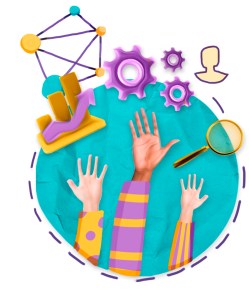 For almost ten years, we have been running participatory evaluation (PE) courses and workshops for a range of sectors. Some training events have been one-off introductory sessions limited to a single webinar, while others have been in-person workshops that have gone into much more detail over three to five days. The increase in interest in postgraduate PE training is a much more recent phenomenon and members of the EvalParticipativa team have taught at various universities in Latin America and Europe.
 Over the last decade, there has been a growing interest in involving citizens in the evaluation of policies, programmes and social interventions. In my article ‘
 In our quest to keep moving forward, we look back to examine evaluation processes that we have accompanied or implemented. As we do so, it is common to ask ourselves about the impact of the decisions taken, the results produced and the recommendations made. It is normal to wonder if the experience has been useful. It can be even more challenging to respond to these questions when an evaluation has been carried out using a participatory approach, given that a great deal of effort in these cases is focused on capacity building and learning for all stakeholders.
 Innovation is no simple task. This is especially true when it is intended to promote citizen participation in such a way as to foster constructive and respectful dialogues. For these dialogues to be successful, ongoing creative processes must be maintained. This is true for all institutions and organisations that seek to encourage civil society participation in political processes and decision-making in the hope of creating modern inclusive societies.
 Evaluation is a vast field of designs and methods in continuous development. The numerous parameters and choices associated with different methodological options can be difficult to fully understand without deep study and desk review.